If you ask someone in the UK how they reduce their electricity bill today, the answer is becoming increasingly simple:
"We use more electricity at night."
Over the past few years, Time-of-Use (TOU) electricity tariffs have become one of the biggest drivers of residential energy storage in the UK. Instead of using electricity whenever it's needed, many homeowners are now planning when to use it.
For households with an electric vehicle, the difference is even more significant.
A typical EV tariff may offer electricity at around 7p/kWh between 11:00 pm and 6:00 am, while daytime electricity can cost more than 25p/kWh. Some flexible tariffs for households without an EV can reach 40–50p/kWh during peak periods.
This pricing difference has completely changed how many British families use electricity.
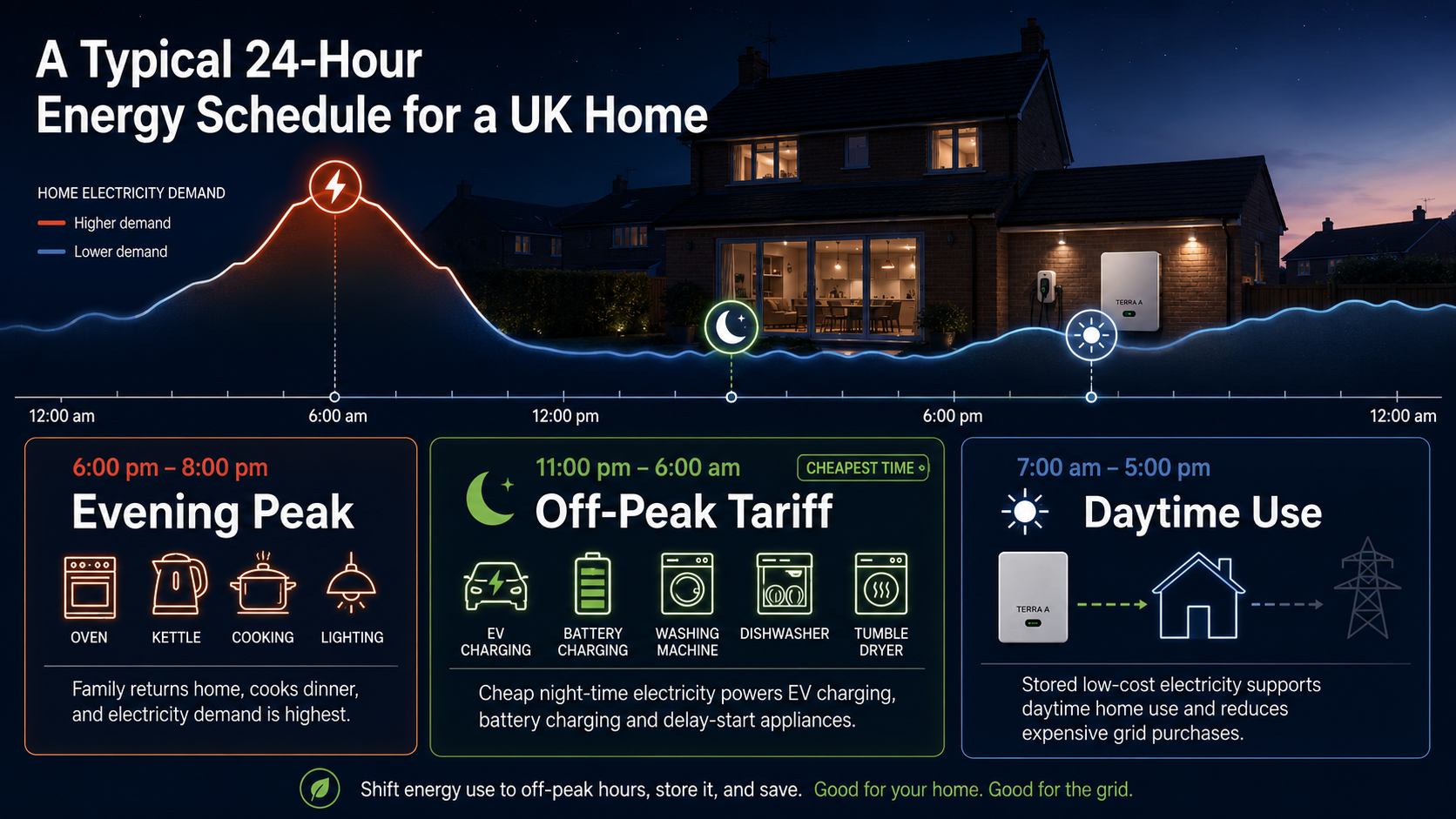
A Typical Evening in a UK Home
Rather than running high-power appliances immediately after dinner, many households now schedule them to operate overnight.
A typical evening might look like this:
6:00 pm – 8:00 pm
The family returns home from work.
Dinner is prepared.
The oven, kettle and kitchen appliances are used as normal.
Electricity demand is at its highest during this period.
11:00 pm – Off-Peak Tariff Begins
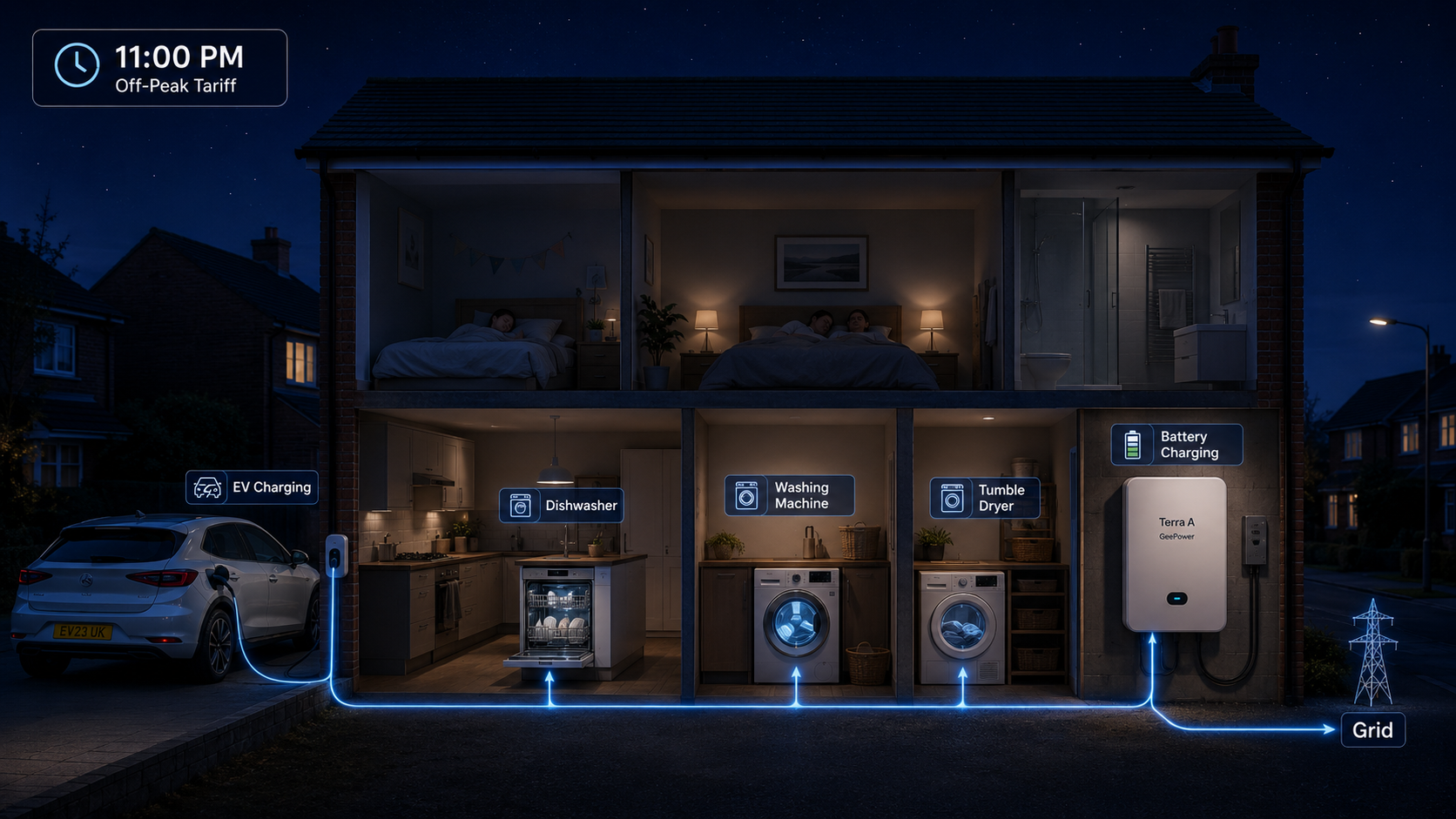
This is when the home's energy strategy changes.
Instead of wasting the cheapest electricity of the day, many homeowners automatically start:
● Charging the EV
● Charging the home battery
● Running the washing machine
● Running the dishwasher
● Running the tumble dryer
Most modern appliances include a delay-start function, making this process completely automatic.
The family is asleep, but the house is quietly preparing for the next day.
Why a Home Battery Makes Even More Sense
Without battery storage, the cheapest electricity is only available while you're sleeping.
With a home battery such as GeePower Terra A, that low-cost electricity can be stored overnight and used throughout the following day.
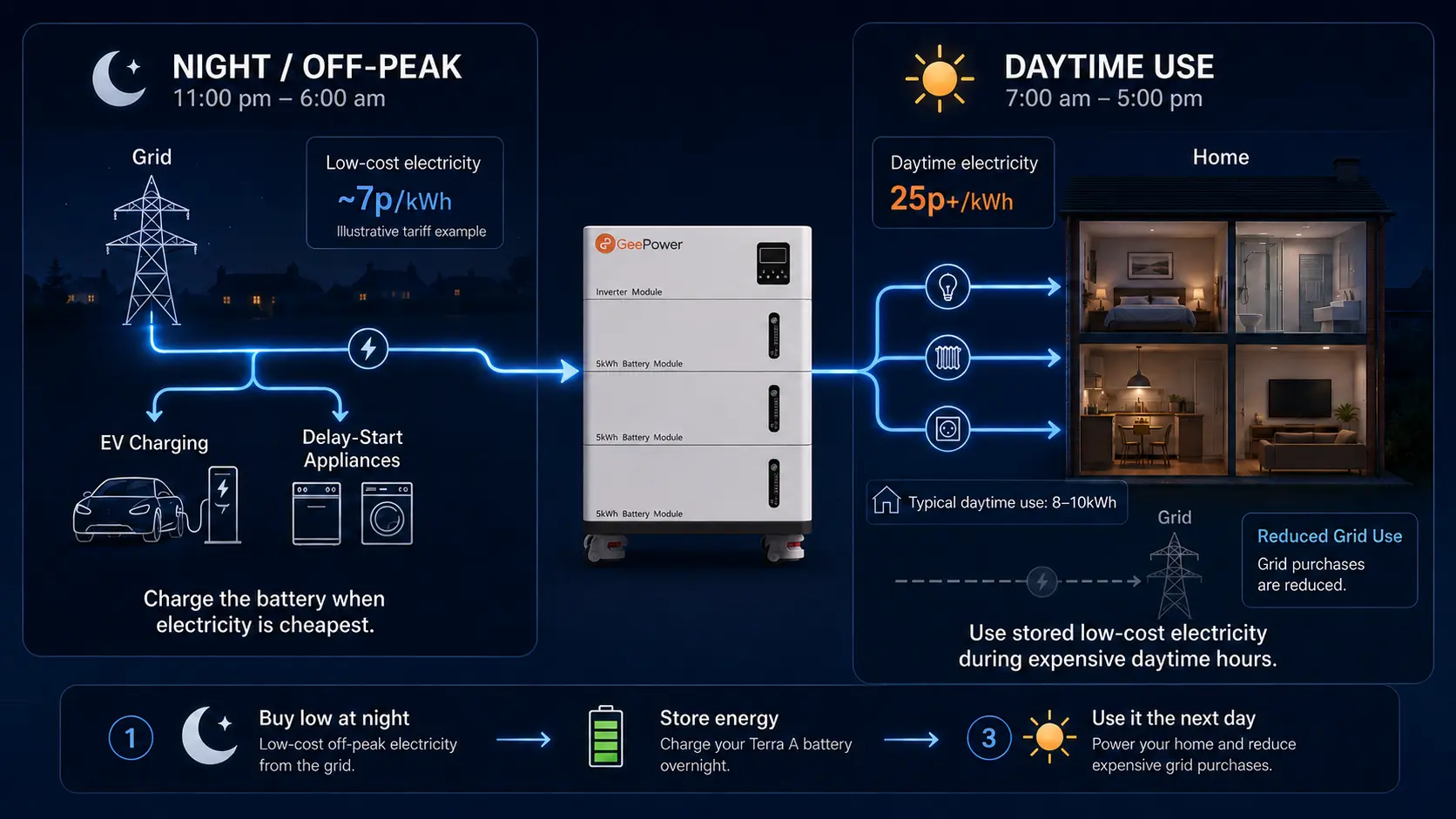
Imagine a typical household that only consumes 8–10kWh during daytime hours.
The battery is fully charged overnight using low-cost electricity.
The next morning, it becomes the primary power source for the home, reducing the amount of expensive daytime electricity purchased from the grid.
The entire process happens automatically.
No switches.
No daily adjustments.
No complicated settings.
What Happens If the House Needs More Power?
Many homeowners worry that a battery inverter has a limited output power.
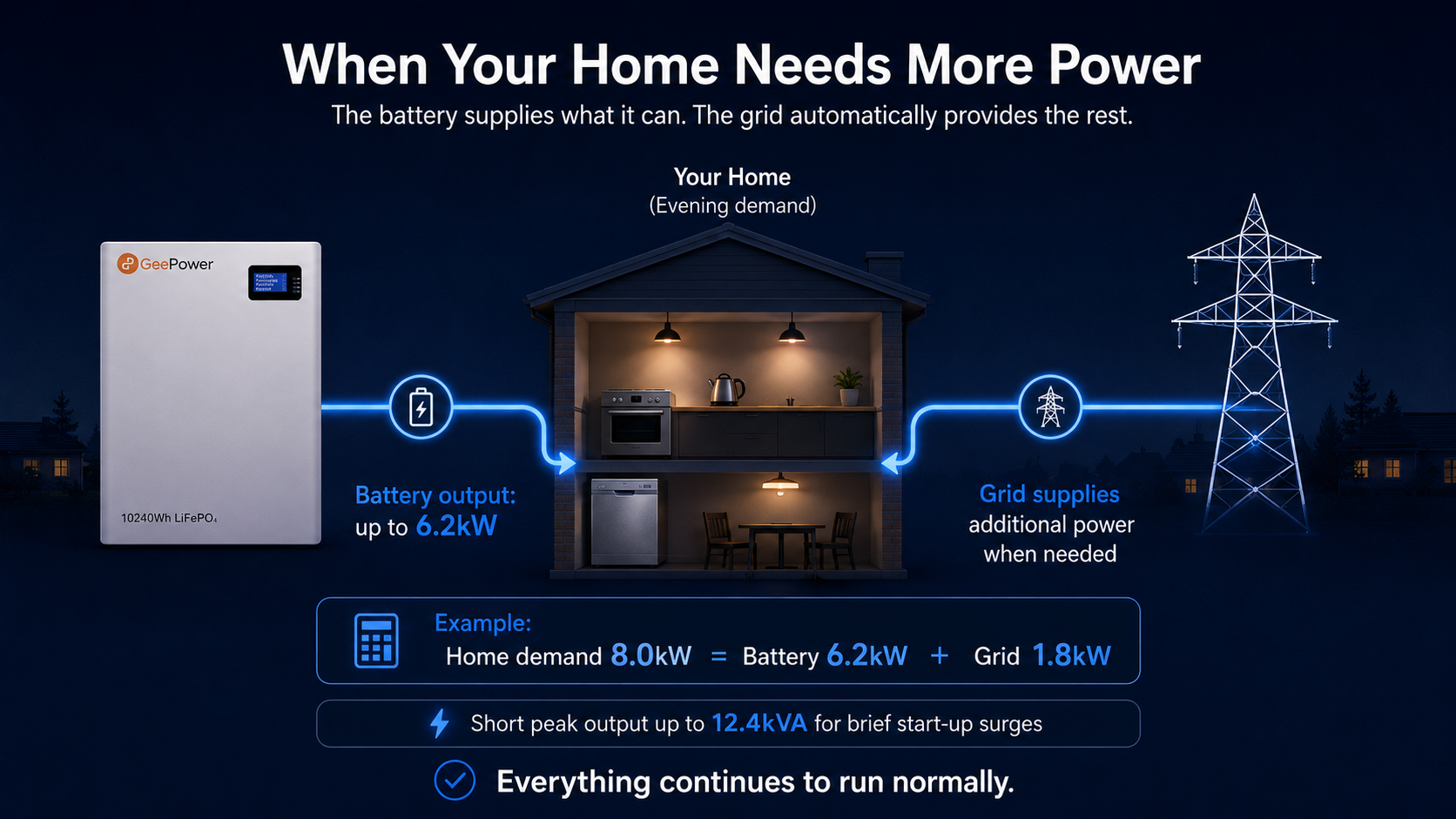
For example, Terra A provides a continuous output of 6.2kW.
So what happens if someone is cooking dinner while several appliances are running?
The answer is simple.
The battery supplies as much power as it can, while the utility grid automatically provides any additional power required.
For brief appliance start-up surges, Terra A can also deliver a short-duration peak output of up to 12.4kVA, helping accommodate momentary high-power demands.
From the homeowner's perspective, everything simply continues to operate normally.
Designed Around Real UK Living
One thing we've learned from working with UK installers is that residential energy storage is no longer just about solar panels.
Today's homeowners are looking for smarter ways to make the most of Time-of-Use tariffs, reduce electricity bills and charge their EVs more economically.
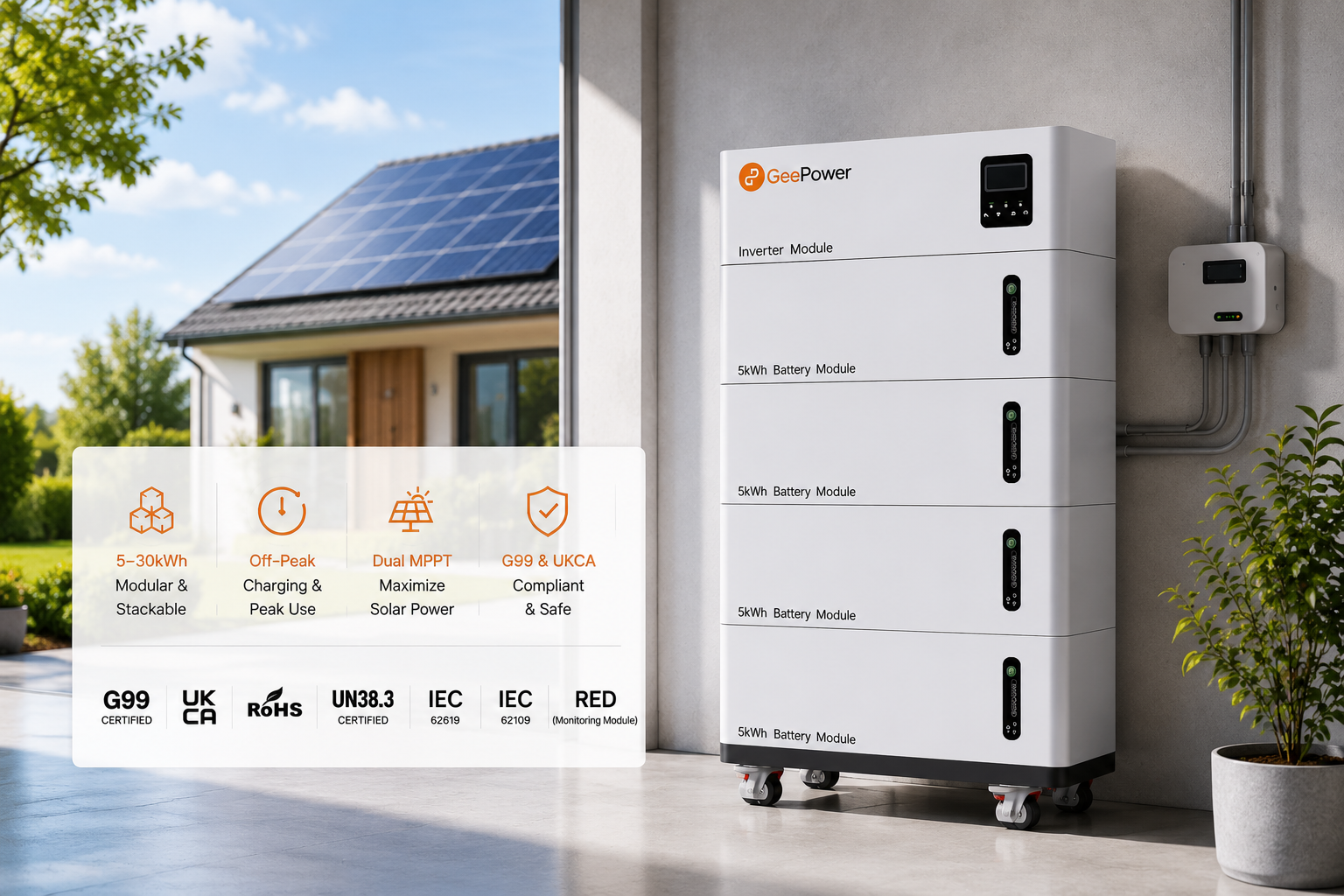
That is exactly why Terra A has been designed to work seamlessly alongside everyday life.
Charge when electricity is cheap.
Use it when electricity is expensive.
Let the system do the rest.
Looking Ahead
In our next article, we'll answer another question many UK homeowners ask:
"How much money can a home battery actually save every year?"
We'll use real UK electricity tariffs and typical household energy usage to calculate the potential savings of a home energy storage system.