Viele beginnen die ESS-Auswahl mit dem falschen Ansatz.
Die erste Frage lautet meist: „Wie viele kWh brauche ich?“ Sie ist berechtigt, sollte aber erst nach den anderen Fragen beantwortet werden.
Noch vor der Kapazität bestimmen vier Faktoren, welche Systemart für Ihr Projekt überhaupt infrage kommt: Netzbedingungen, Installationsumgebung, Wartungsmöglichkeiten und Projektgröße. Werden diese falsch eingeschätzt, hilft auch der gründlichste Vergleich von Datenblättern nicht gegen eine unpassende Lösung.
Dieser Artikel bietet einen praktischen Rahmen für die Entscheidung zwischen ESS für Wohngebäude, dezentralen und containerisierten ESS – bevor Sie Zeit mit Datenblättern verbringen.
Die eigentliche Auswahl: vier Fragen vor dem Vergleich von Datenblättern
Viele Auswahlleitfäden übersehen: Die drei ESS-Kategorien unterscheiden sich nicht vor allem in der Kapazität, sondern darin, wer sie betreibt, wo sie installiert werden und welche Netzbedingungen vorliegen.
Stellen Sie zuerst diese vier Fragen.
1. Wie ist die Netzsituation? Starkes Netz, schwaches Netz oder gar kein Netz? Ein vollständig netzferner Standort stellt grundsätzlich andere Anforderungen als ein netzgekoppeltes Gewerbegebäude, selbst wenn die Kapazitätsangaben ähnlich sind.
2. Wie sieht die Installationsumgebung aus? Handelt es sich um ein Wohnhaus mit Dachanlage, ein Gewerbegebäude mit eigenem Elektroraum oder einen offenen Industriestandort? Platz, Witterungsschutz und Zugänglichkeit bestimmen mit, was sich installieren lässt.
3. Wer wartet das System? Ein Hausbesitzer mit App hat andere Möglichkeiten als ein Gebäudemanager mit eigenem Elektroteam. Die Systemkomplexität sollte zu den tatsächlichen Fähigkeiten der Betreiber passen – nicht zu einer optimistischen Selbsteinschätzung.
4. In welchem Kapazitätsbereich liegt das Projekt ungefähr? Es geht nicht um einen genauen Wert, sondern um die Größenordnung: unter 30 kWh, zwischen 50 kWh und einigen hundert kWh oder ab 1 MWh?
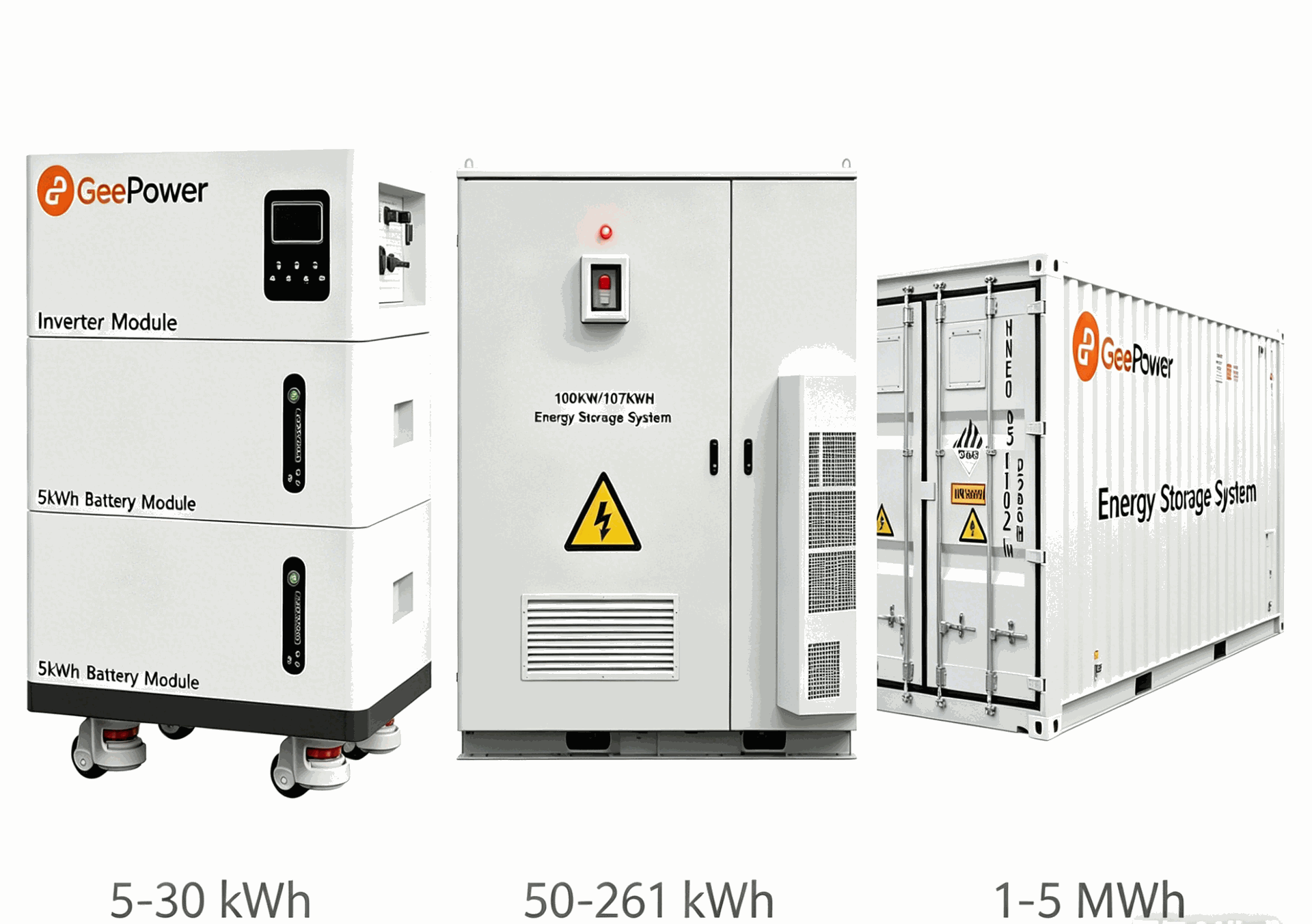
Die GeePower-Produktlinie reicht von 5-kWh-Heimspeichern bis zu containerisierten Konfigurationen mit 5 MWh. Das sind nicht nur Kapazitätsstufen: Jede Stufe steht für eine andere Systemarchitektur, Integration und Installationsweise.
Sind diese vier Fragen beantwortet, ist die Auswahl deutlich klarer.
ESS für Wohngebäude: netzgekoppelt, haushaltsgerecht und einfach zu bedienen
Treffen alle drei Punkte auf Ihr Projekt zu – unter 30 kWh, Netzanschluss vorhanden und Endnutzer ist ein Hausbesitzer oder ein kleiner Gewerbebetrieb –, ist ein ESS für Wohngebäude der passende Ausgangspunkt.
Der zentrale Nutzen ist bekannt: Optimierung nach Tarifzeiten, Eigenverbrauch von Solarstrom und Ersatzstrom bei Ausfällen. Weniger offensichtlich sind die Grenzen.
Ein ESS für Wohngebäude ist sinnvoll, wenn:
- Der tägliche Energiebedarf liegt im Bereich eines Haushalts oder kleinen Gewerbebetriebs, etwa eines kleinen Ladens, Cafés oder Homeoffice mit wichtigen Verbrauchern
- Der Endnutzer kann über eine Bedienoberfläche Ladezeiten für Nebenzeiten einstellen und das System per App überwachen
- Der Standort erlaubt Wand- oder Bodenmontage mit üblichen elektrischen Anschlüssen
Nicht mehr sinnvoll ist dies, wenn:
- Der dauerhafte Leistungsbedarf übersteigt das, was ein System mit 30 kWh realistisch abdecken kann
- Es gibt keinen Netzanschluss und der Standort benötigt einen echten Inselbetrieb
- Der Betreiber kann nicht einmal grundlegende Systemeinstellungen vornehmen
Die TERRA A Series von GeePower deckt dieses Segment mit 5 kWh bis 30 kWh ab. Sie basiert auf LFP-Chemie und lässt sich durch stapelbare Module erweitern. Ein praktischer Hinweis aus den offiziellen Produktunterlagen: Bei einer späteren Kapazitätserweiterung wird empfohlen, zusätzliche Module innerhalb von 6 Monaten nach der Erstinstallation hinzuzufügen. Das ist für die Projektplanung relevant, wenn ein Kunde später ausbauen möchte.
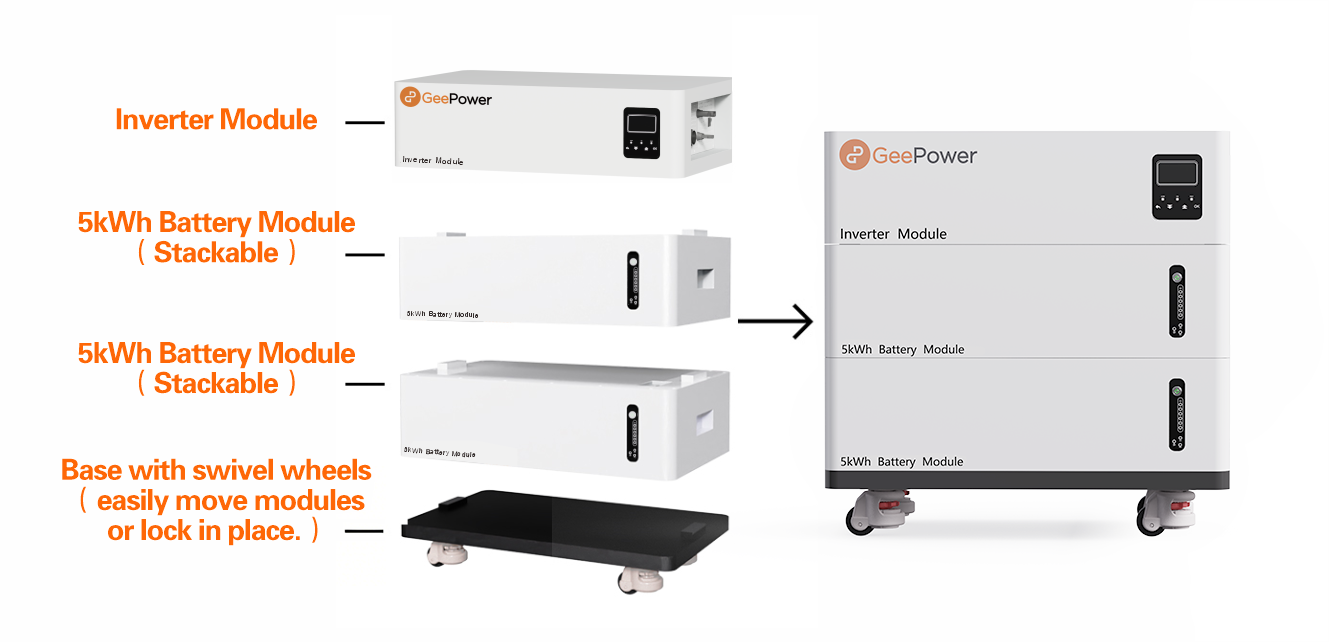
Das System umfasst einen integrierten Wechselrichter, zwei MPPT, intelligente Zeitsteuerung und integrierte Feuerlöschung. Für Wohngebäude und kleine Gewerbeprojekte deckt es die vorgesehenen Einsatzfälle ab, ohne dass BMS oder Wechselrichter gesondert beschafft werden müssen.
→ [TERRA A Series für Wohngebäude und kleine Gewerbeprojekte entdecken]
Dezentrales ESS: Bei unzuverlässiger Netzversorgung oder Kapazität im gewerblichen Maßstab
Dezentrale ESS decken ein breiteres und möglicherweise komplexeres Spektrum ab als Heimspeicher. Zwei Situationen sprechen deutlich für diese Kategorie.
Szenario eins: Projekte mit schwachem Netz oder ohne Netzanschluss.
Instabile Netzversorgung ist in manchen Märkten häufig, etwa bei der ländlichen Elektrifizierung, an abgelegenen Industriestandorten, in der Landwirtschaft und in einigen Städten aufstrebender Märkte. Diese Projekte können sich nicht auf das Netz als verlässliche Reserve stützen. Das ESS muss die Energieversorgung zentral steuern und darf nicht nur ein zusätzlicher Puffer sein.
In diesen Fällen muss die Systemarchitektur längere Entladezeiten, eine engere Steuerung und möglicherweise einen vollständigen Inselbetrieb unterstützen. Eine Einheit für Wohngebäude ist dafür nicht ausgelegt.
Szenario zwei: gewerbliche Kapazitätsanforderungen von 50–261 kWh.
Gewerbegebäude, Fabriken, Projekte zur Nutzung eigenen Solarstroms und Anlagen zur dezentralen Erzeugung liegen häufig in diesem Bereich. Die Lastprofile sind komplexer, die elektrische Integration erfordert mehr Sorgfalt, und die Wirtschaftlichkeit beruht eher auf Lastspitzenkappung und Lastverschiebung als auf Tarifunterschieden im Haushalt.
Das gewerbliche ESS von GeePower im Schrankformat deckt diesen Bereich mit 50 kWh bis 261 kWh pro Einheit ab. Es umfasst einen integrierten Wechselrichter und ein intelligentes BMS und ist für eine schnelle Installation und vereinfachte Inbetriebnahme ausgelegt. Das integrierte Schrankformat verringert gegenüber der Montage einzelner Komponenten den Installationsaufwand, was bei mehreren dezentralen Standorten relevant ist.
Wann ein dezentrales ESS nicht mehr passt: Übersteigt der Kapazitätsbedarf an einem Punkt 261 kWh oder erfordert das Projekt eine koordinierte Steuerung mehrerer Standorte im Versorgungsmaßstab, ist eine andere Architektur nötig.
→ [Überblick über gewerbliche und dezentrale ESS-Lösungen]
Containerisiertes ESS: Wenn ein Projekt 1 MWh überschreitet oder eine vollständige Systemintegration erfordert
Ab 1 MWh stellt sich die Frage nach der passenden Lösung anders.
Es geht nun nicht mehr nur um Kapazität, sondern um die Komplexität der Systemintegration, Thermomanagement im großen Maßstab, mehrstufige Sicherheitsarchitektur und die Betriebsinfrastruktur für einen zuverlässigen Einsatz über 10+ Jahre.
Ein containerisiertes ESS ist nicht einfach ein „größerer Schrank“. Es ist eine andere Klasse technisch ausgelegter Systeme.
Projekte, die typischerweise ein containerisiertes ESS erfordern:
- Lastspitzenkappung im großen Maßstab für Industriestandorte mit erheblichen Leistungspreisen
- Netzseitige Speicheranlagen oder Speicher in der Nähe von Anlagen der Energieversorger
- Mikronetze, bei denen die Batterie die primäre netzbildende Komponente ist
- Erneuerbare-Energien-Projekte mit Solar- oder Windkraft, die erhebliche Speicherkapazität am selben Standort benötigen
Das containerisierte ESS von GeePower deckt 1 MWh bis 5 MWh ab. Batterie, PCS, BMS und EMS sind vollständig in einem für den Außenbereich ausgelegten Gehäuse integriert. Zum System gehören ein erweitertes Thermomanagement und ein mehrstufiges Brandschutzkonzept – beides ist in dieser Größenordnung erforderlich und kein optionales Zubehör.
Ein wesentlicher Unterschied zu kleineren Systemen: Diese Projekte erfordern eine fachgerechte Inbetriebnahme und laufende technische Wartung. Verfügt der Projektbetreiber weder über ein eigenes Fachteam noch über einen Servicevertrag, muss dies vor der Geräteauswahl geklärt werden.
Eine weitere Folge: Bei containerisierten ESS erfolgt in der Regel vor der Beschaffung eine technische Beratung. Systemauswahl und Systemkonfiguration sind zwei verschiedene Schritte.
→ [Projektdetails zu containerisierten ESS]
Praktischer Entscheidungsrahmen: Die passende Architektur für Ihr Projekt
So lässt sich die Auswahlentscheidung zusammenfassen:
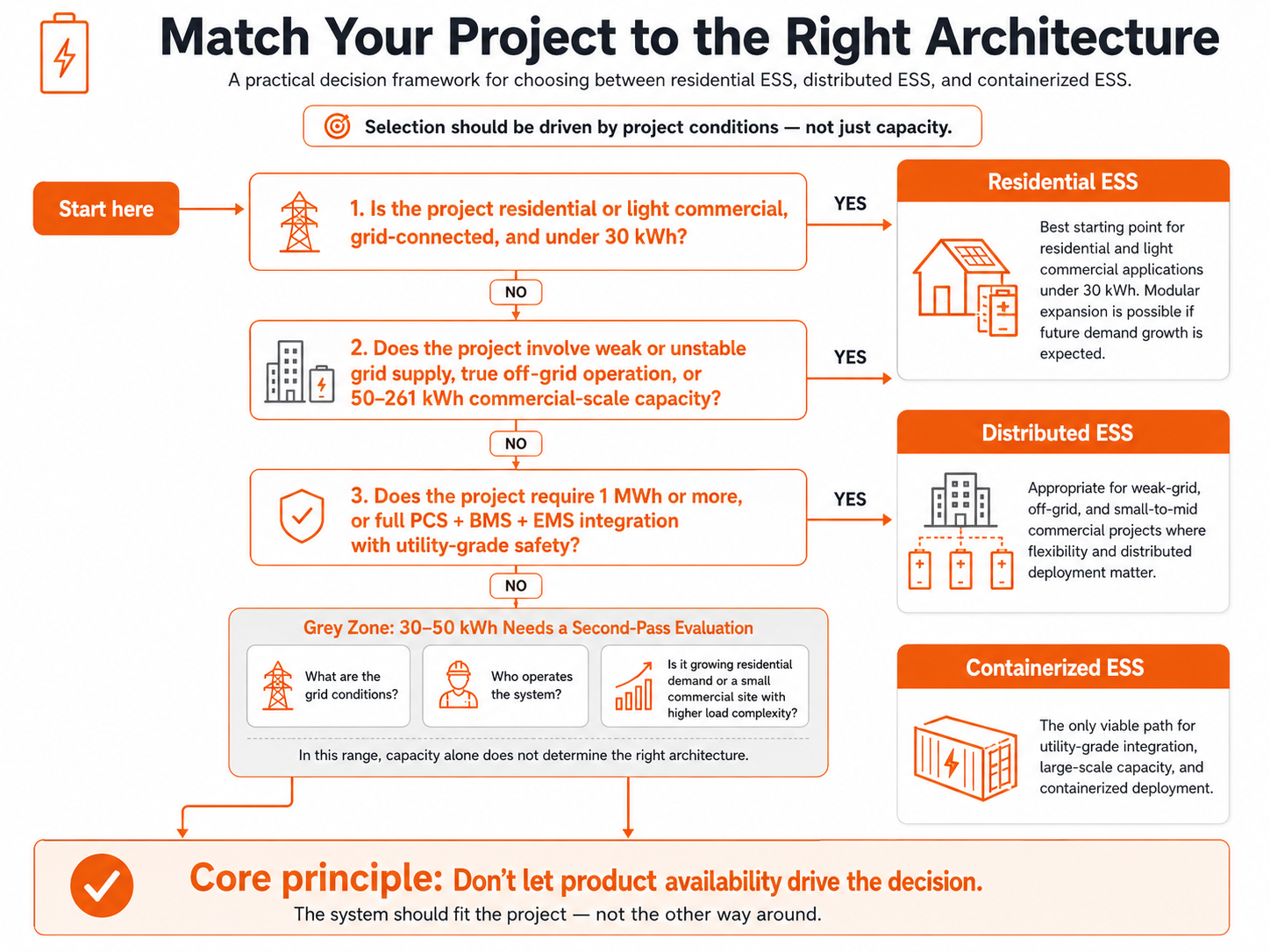
Für ein netzgekoppeltes Wohn- oder kleines Gewerbeprojekt unter 30 kWh ist ein ESS für Wohngebäude der passende Ausgangspunkt. Wenn später steigender Bedarf erwartet wird, ist eine modulare Erweiterung möglich.
Bei schwacher oder instabiler Netzversorgung, tatsächlichem Inselbetrieb oder gewerblicher Kapazität zwischen 50 kWh und 261 kWh ist ein dezentrales ESS die passende Architektur.
Erfordert Ihr Projekt 1 MWh oder mehr oder eine vollständige Integration von PCS, BMS und EMS mit Sicherheitsauslegung auf Versorgungsniveau, kommt nur ein containerisiertes ESS infrage.
Zwischen 30 kWh und 50 kWh liegt ein Grenzbereich. Projekte dieser Größe brauchen eine zweite Prüfung: Wie sind die Netzbedingungen? Wer betreibt das System? Handelt es sich um eine noch wohngebäudetypische Anwendung mit wachsendem Bedarf oder um einen kleinen Gewerbestandort mit komplexeren Lasten? Die Antworten bestimmen die Architektur, nicht die Kapazitätszahl allein.
Für alle drei Kategorien gilt: Die bloße Verfügbarkeit eines Produkts sollte die Entscheidung nicht bestimmen. Das System muss zum Projekt passen.
Unklar, welche Architektur passt? Beginnen Sie beim Projekt, nicht beim Datenblatt
Der obige Leitfaden deckt eindeutige Fälle ab. In realen Projekten passen die Anforderungen jedoch oft nicht sauber in eines von drei Feldern.
Netzbedingungen sind nicht immer eindeutig dokumentiert. Kapazitätsanforderungen beruhen mitunter auf Schätzungen. Auch die Wartungsmöglichkeiten werden in frühen Projektgesprächen häufig überschätzt.
Wenn bei einem Projekt die passende Architektur nicht sofort erkennbar ist, ist das normal.
Das GeePower-Team arbeitet mit Händlern, EPC-Unternehmen und Projektentwicklern bereits bei der ersten Systemauswahl zusammen. Teilen Sie uns Projektkapazität und Einsatzszenario mit; wir empfehlen eine passende ESS-Architektur.
Weiterführende Artikel:
- Dezentrale ESS: eine intelligente Wahl für schwache Netze und netzunabhängige Projekte
- Warum bei den meisten großen ESS-Projekten Containersysteme gewählt werden
- Kann eine Heimbatterie im Freien installiert werden? Ein Praxisleitfaden zu GeePower ESS