Als The 22:23 CIC eine verbindliche Zolltarifentscheidung im Vereinigten Königreich (ATaR) der britischen Steuer- und Zollbehörde HMRC für die GeePower Terra A Series erhielt, ging es um mehr als eine Zollformalität. Erfahren Sie, warum die zolltarifliche Einreihung schon früh in die ESS-Markteintrittsplanung gehört.
1. Produktspezifikationen sind nur die halbe Geschichte
Die meisten ESS-Gespräche beginnen mit Kapazität, Zellchemie, Wechselrichterleistung, Sicherheitskonzept und Zertifizierung. Diese Angaben sind wichtig. Sie helfen Händlern und Installateuren einzuschätzen, ob ein System zu einem Haushalt passt.
Sie bringen das Produkt aber noch nicht auf den Markt.
Für Importeure, Händler und lokale Partner muss das Produkt außerdem korrekt beschrieben, eingereiht, dokumentiert und verzollt werden. Ist dies unklar, zeigt sich das Problem schon vor der Installation: in Versandunterlagen, der Kommunikation mit dem Zoll und einer nicht mehr stimmigen Kostenplanung.
Die zolltarifliche Einreihung ist kein Marketingthema. Sie steht hinter Angeboten und Frachtrechnungen, nicht auf Produktseiten. Für Heimspeicher kann sie jedoch unmittelbar die Kostensicherheit, die Projektplanung und die Erklärung des Lieferwegs gegenüber Kunden beeinflussen.
Dieser Artikel ist kein Zollleitfaden. Er erklärt, warum die zolltarifliche Einreihung zur geschäftlichen Planung gehört und weshalb das britische Beispiel der Terra A Series aufschlussreich ist.
→ [Produktseite für ESS in Wohngebäuden]
2. Was eine zolltarifliche Einreihung tatsächlich bewirkt
Ein Warencode ist die Zollkennziffer, mit der eine Ware beim Grenzübertritt beschrieben wird.
Dieser Code beeinflusst, wie die Waren angemeldet werden, welche Zolltarifmaßnahmen gelten können, welche Nachweise benötigt werden und wie die Sendung gegenüber Zollagenten oder Behörden behandelt wird. Er verbindet die Warenbeschreibung mit der Behandlung bei der Einfuhr.
Bei einfachen Waren ist das meist unkompliziert. Bei komplexen Systemen nicht.
Ein Heimspeicher kann Batterie, Wechselrichter, Steuerungselektronik, Anschlusstechnik und Zubehör umfassen. Die Einreihung hängt davon ab, wie die Waren eingeführt werden, welche Funktion das System erfüllt und wie die Lieferung zusammengestellt ist. Wird das Thema erst kurz vor dem Versand geklärt, entstehen später oft unerwartete Kosten, Verzögerungen bei Unterlagen und unnötige Rückfragen beim Zoll.
3. Warum Heimspeicher schwerer einzureihen sind, als es scheint
Ein Heimspeicher wird selten als eine einzige, klar abgegrenzte Einheit eingeführt.
Das System kann in mehreren Kartons geliefert werden: LiFePO4-Batteriemodule, Hybridwechselrichter oder Ladegerät, Steuerungselektronik, Anschlussverteiler und Installationszubehör. Manche Systeme sind modular, manche werden vor Ort zusammengebaut. Verpackungsaufbau und Installationsaufbau sind nicht dasselbe.
Dieser Unterschied ist für die Einreihung wichtig. Der Zoll prüft, was die Waren sind und wie sie zur Einfuhr gestellt werden. Bei einem modularen Produkt muss die Beschreibung das System klar erklären. Werden Batterien und Wechselrichter getrennt versandt, arbeiten aber zusammen, dürfen die Unterlagen keinen Raum für Missverständnisse lassen.
Auch die Konfiguration spielt eine Rolle. Ein System mit 5 kWh und eines mit 30 kWh gehören zur selben Produktfamilie, müssen beim Versand aber jeweils zutreffend beschrieben werden. Optionale Komponenten, unterschiedliche Modulzahlen und Kapazitäten sind in Produktunterlagen und Handelsdokumenten konsistent zu erfassen.
Händler müssen keine Zollexperten werden. Sie sollten jedoch wissen, dass Produktunterlagen, Verpackung und Handelsbezeichnungen das tatsächliche System widerspiegeln müssen – nicht eine vereinfachte Darstellung.
4. Warum das schon vor dem Markteintritt wichtig ist
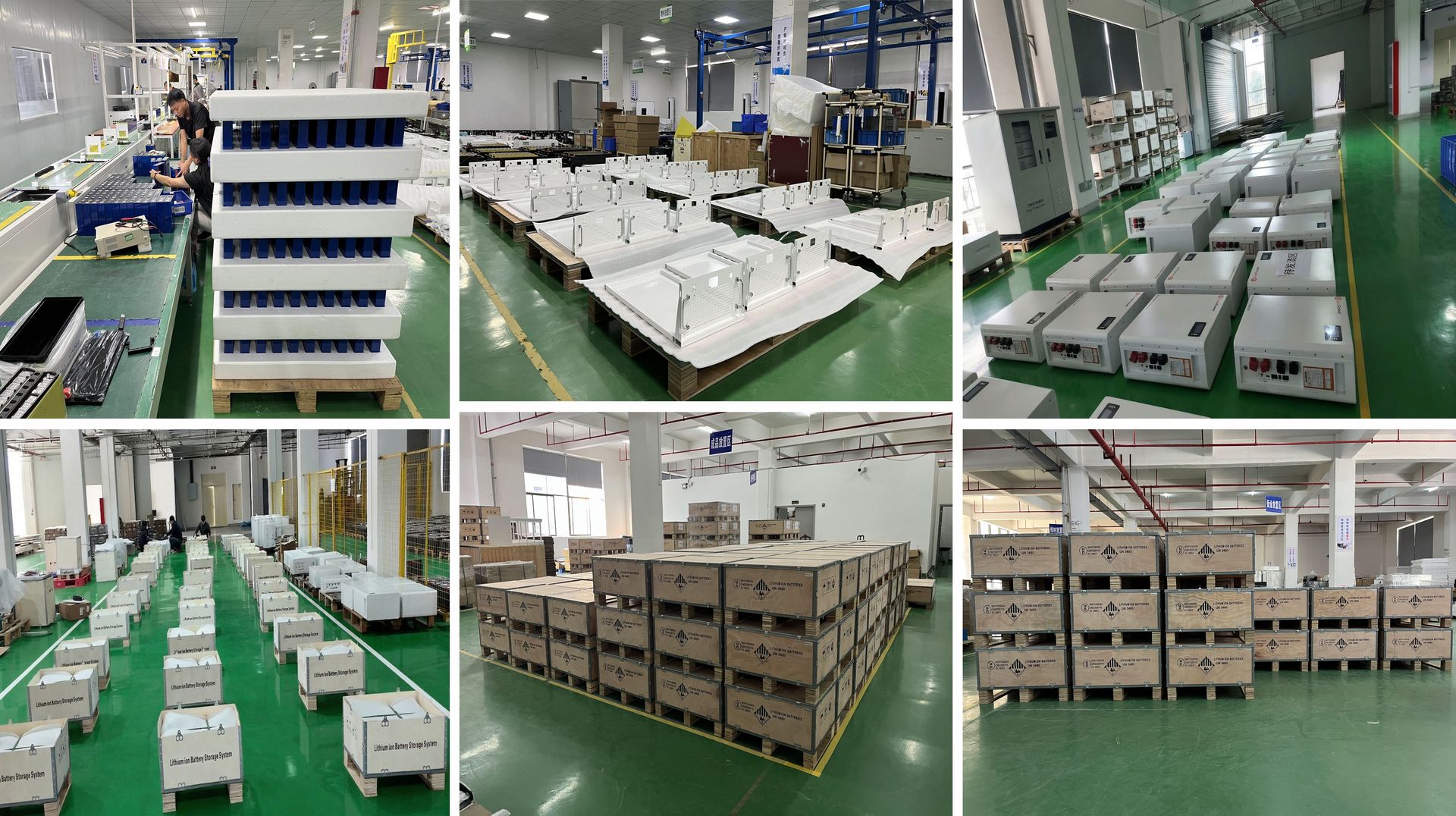
Für Händler ist die Einreihung keine reine Verwaltungsfrage. Sie beeinflusst Preise, Planung und Kundenvertrauen – schon vor der ersten Installation.
Am unmittelbarsten wirkt sich dies auf die Planung der Gesamteinfuhrkosten aus. Ist die Einreihung unklar, lassen sich die Gesamtkosten für die Einfuhr eines Systems kaum verlässlich berechnen. Diese Unsicherheit beeinflusst Großhandelspreise, Angebote von Installateuren und die Margenplanung.
Hinzu kommt eine stimmige Dokumentation. Versandpapiere, Rechnungen und Packlisten müssen dieselbe Einreihungslogik unterstützen. Ist das nicht der Fall, verlangsamt sich die Kommunikation mit dem Zoll und die Planbarkeit leidet.
Ist eine verlässliche Berechnung der Einfuhrkosten nicht möglich, leidet die Bestandsplanung. Händler zögern mit der Lagerhaltung. Der Vertrieb verliert an Schwung, insbesondere wenn Installateure und Haushalte klare Auskünfte zur Verfügbarkeit erwarten.
Die Auswirkungen auf die Kundenkommunikation sind weniger sichtbar. Haushalte fragen nicht nach Warencodes, wohl aber nach Verfügbarkeit, Kosten und einem verlässlichen Lieferweg. Eine klarere Einreihung hilft dem Händler, diese Fragen präziser zu beantworten.
Ein Lieferant, der Einreihung und Dokumentation versteht, verringert Probleme, bevor das Produkt am Installationsort ankommt. Das sollte bei der Lieferantenbewertung berücksichtigt werden.
5. Klarheit bei der Einfuhr angemessen beschreiben
Eines sollte klar gesagt werden: Mehr Klarheit bei der Einfuhr ist nützlich, bedeutet aber keine absolute Sicherheit und sollte auch nicht so dargestellt werden.
Zolltarifmaßnahmen hängen vom Markt, Zustand und Ursprung der Ware, den Einfuhrunterlagen und den tatsächlich angemeldeten Gütern ab. Eine Entscheidung verringert Unklarheiten, ersetzt aber keine korrekte Abwicklung.
Hier kommt es auf eine genaue Wortwahl an. „Klarheit bei der Einreihung“, „bessere Kostentransparenz“ und „weniger Unklarheiten bei Unterlagen“ beschreiben den geschäftlichen Nutzen zutreffend. „Vollständige Einfuhrsicherheit“ hingegen nicht; eine Übertreibung schafft später Probleme für alle Beteiligten.
Eine verbindliche Zolltarifentscheidung im Vereinigten Königreich (ATaR) klärt die Einreihung bestimmter Waren. Sie ist weder ein Produktsicherheitszertifikat noch eine Netzgenehmigung oder eine behördliche Empfehlung für das System. Zertifizierungs- und Konformitätsanforderungen müssen für die genaue Konfiguration und den Zielmarkt gesondert bestätigt werden.
Die Haltung von GeePower ist klar: Wir legen Erwartungen lieber zu Beginn zutreffend fest, als später Missverständnisse korrigieren zu müssen.
6. Ein Beispiel aus Großbritannien: The 22:23 CIC und die GeePower Terra A Series
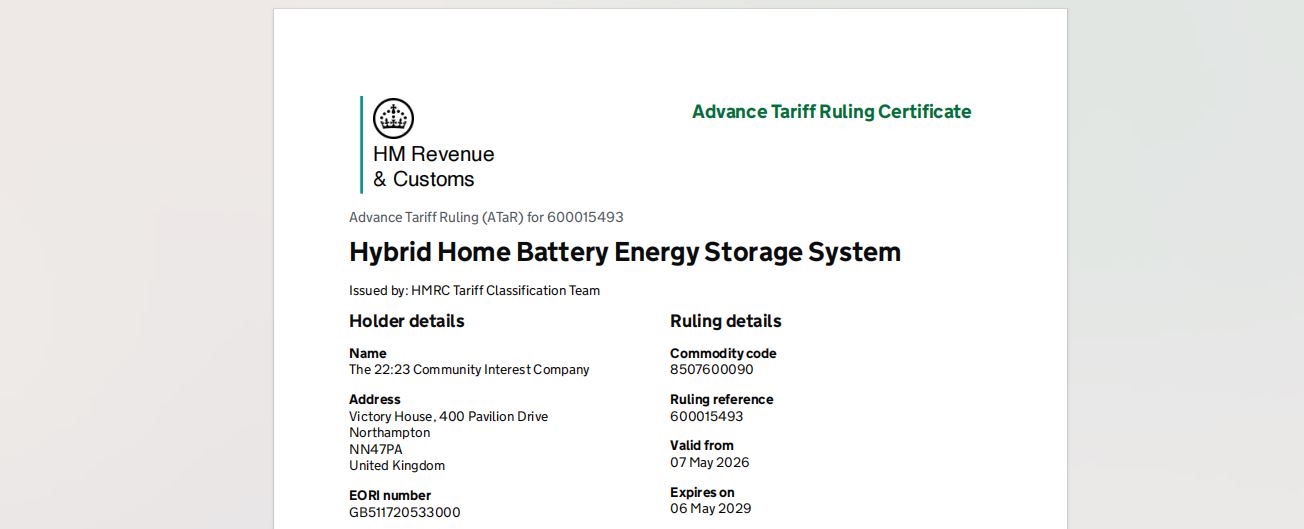
Das britische Beispiel zeigt, wie sich eine klare Einreihung auf ein konkretes Heimspeicherprogramm auswirkt.
The 22:23 Community Interest Company ist exklusiver britischer Händler der GeePower Terra A Series. HMRC hat The 22:23 CIC unter der Referenz ATaR 600015493 eine verbindliche Zolltarifentscheidung im Vereinigten Königreich (ATaR) erteilt. Sie bestätigt den Warencode 8507600090 und gilt vom 07 May 2026 bis 06 May 2029 für die Terra A Series Modelle GPTE-A-51.2-100 bis GPTE-A-51.2-600.
Die Produktbeschreibung ist damit einer festgelegten Einfuhrtarifierung zugeordnet. The 22:23 CIC verfügt für diese Modelle nun über eine klarere Grundlage für Zollunterlagen und Kostenplanung.
Auch Installateure und Partner erhalten damit einen konkreten Bezugspunkt. Die Produktgespräche stützen sich nicht nur auf Verkaufsunterlagen, sondern auf eine formale Einreihung der in der Entscheidung beschriebenen Waren.
Dies ist keine Vorlage für jeden Markt. Jedes Land hat eigene Tarif- und Konformitätsanforderungen. Es zeigt jedoch, wie eine frühe Prüfung der Einreihung aussehen kann und was sie ermöglicht.
→ [Artikel zum britischen Markt]
7. Was die Entscheidung klarstellt
Die Entscheidung beschreibt das Produkt als vollständiges Heimspeichersystem und nicht als Sammlung getrennter Hardwarekomponenten. Diese Einordnung ist wichtig.
Die Warenbeschreibung umfasst ein modulares, stapelbares System: ein Wechselrichtermodul, mehrere LiFePO4-Batteriemodule mit je 5 kWh und einen separaten Anschlussverteiler. Vor Ort werden die Batteriemodule auf einer fahrbaren Basis gestapelt und das Wechselrichtermodul darauf montiert. Je nach Zahl der Batteriemodule – eins bis sechs – liegt die Kapazität bei 5–30 kWh.
Auch der beschriebene Einsatzfall ist genau festgelegt: Das System lädt sich bei britischen Nacht- oder Niedertarifen aus dem öffentlichen Stromnetz, speichert Energie in LiFePO4-Modulen und versorgt den Haushalt bei höheren Tagespreisen. Bei einem Netzausfall stellt es außerdem Ersatzstrom bereit.
Eine Grenze macht die Entscheidung ausdrücklich klar: Das System kann nicht ins Netz einspeisen. Es kann keinen Strom an das öffentliche Verteilnetz abgeben. Damit ist die vorgesehene Nutzung des Produkts eindeutig beschrieben und die Lieferkette kann konsistent darüber informieren.
Die Entscheidung dokumentiert auch die Verpackung: getrennte Packstücke für Wechselrichtermodul, einzelne Batteriemodule und Anschlussverteiler. Bei einem modularen Heimspeicher verringert diese Beschreibung Missverständnisse zwischen Produktaufbau, Versandstruktur und Montage vor Ort.
8. Was das für britische Haushalte, Installateure und Partner bedeutet
Eine klarere Einreihung erleichtert die Kommunikation – und ist für ein Programm zum Selbstkostenpreis auch operativ wichtig.
Für Haushalte liegt der Nutzen nicht im Warencode selbst. Das gemeinschaftsorientierte Modell von The 22:23 CIC setzt voraus, dass die tatsächlichen Lieferkosten transparent erklärt werden können. Wenn der Einfuhrweg dokumentiert und die Einreihung bestätigt ist, wird diese Erklärung einfacher und glaubwürdiger. Haushalte müssen den Zoll nicht verstehen, profitieren aber von einem lokalen Programm, das die Lieferkette lückenlos beschreiben kann.
Für Installateure verringert ein klarer Produktumfang das Risiko vor dem Verkauf. Ein Heimspeicher mit 5–30 kWh, modularen Batteriepaketen, Wechselrichtermodul und Anschlussverteiler braucht eine eindeutige Systembeschreibung. Wer weiß, was enthalten ist und was nicht, kann den Ersatzstrombetrieb, die Konfiguration und die Systemgrenzen genauer erklären.
Für britische Partner erleichtert eine klare Einreihung die Angebots- und Bestandsplanung sowie die Projektterminierung. Sie bietet dem lokalen Team eine bessere Grundlage für Gespräche mit Zollagenten, Logistikdienstleistern und Installationskoordinatoren.
GeePower unterstützt The 22:23 CIC in diesem Programm mit Produktinformationen, Konfigurationsdetails und abgestimmten Unterlagen für die von der Entscheidung erfassten Modelle der Terra A Series. Der britische Partner bleibt Ansprechpartner vor Ort für Haushalte und Installateure sowie für die Marktumsetzung.
9. Was internationale Händler daraus mitnehmen sollten
Das britische Beispiel ist keine allgemeingültige Vorlage. Es veranschaulicht jedoch einen breiter anwendbaren Punkt.
Bei der Bewertung eines Heimspeicherlieferanten sind Preis und Spezifikation nur ein Teil des Bildes. Das Produkt braucht auch eine klare Beschreibung, nachvollziehbare Unterlagen, eine zum Markt passende Konfiguration und einen gangbaren Konformitätsweg. Fehlt eines dieser Elemente, verlangsamt sich das Projekt oft erst nach den ersten Verkaufsgesprächen, wenn operative Fragen auftauchen.
Einreihung, Dokumentation, Zertifizierung und Eignung lokaler Partner sollten vor größeren Zusagen geprüft werden. Zertifizierungsanforderungen sind anhand der genauen Produktkonfiguration und des Zielmarkts zu bestätigen. Die Einfuhrtarifierung sollte mit qualifizierter Unterstützung vor Ort geprüft werden.
Ein Markteintritt, der allein nach dem Produktpreis geplant wird, führt später häufig zu teuren Überraschungen. Ein besserer Plan verknüpft Produktauswahl, Einfuhrplanung, Konformitätsprüfung, Installationsbedingungen und Kundenkommunikation früh genug, um das Geschäftsmodell mitzugestalten.
GeePower arbeitet mit lokalen Händlern an Produktinformationen, Konfigurationsdetails und Dokumentation für Heimspeicher, ausgerichtet auf Zielmarkt und Projektanforderungen.
10. Nächste Schritte
Britische Haushalte und Installateure: Kontaktieren Sie The 22:23 CIC für Informationen zum britischen Programm, zum lokalen Ablauf und zum Heimspeichermodell zum Selbstkostenpreis.
Partner auf dem britischen Markt: Sprechen Sie mit The 22:23 CIC über die Zusammenarbeit mit Installateuren, den Produktumfang und die Betreuung in Großbritannien.
Internationale Händler: Kontaktieren Sie GeePower für Produktinformationen zu Heimspeichern und Gespräche über eine Zusammenarbeit.
→ 👉 Mit GeePower-Experten sprechen