
You have decided on cabinet BESS, but the proposals offer different packages. One includes the battery and power conversion equipment in a single cabinet. Another supplies a battery cabinet, with the PCS and other equipment listed separately. Which should you shortlist?
Start with the integrated option if it meets your requirements and reduces the equipment selection and coordination your team must handle. Consider a battery-only cabinet with an external PCS when it better matches your required power-to-energy combination, or available integrated options cannot support the PCS or controls you need. If both fit, compare the complete cost of delivering an operating system.
This guide covers new, grid-connected commercial and industrial installations without an existing PCS that must be reused. Both options are compared against the same power and operating requirements, with usable energy compared at the same AC output point. Backup or off-grid operation needs a separate functional check.
| Your requirement | Option to examine first | Main reason |
|---|---|---|
| An integrated configuration fits, and you want fewer equipment interfaces to coordinate | All-in-one BESS | More of the internal matching and assembly is handled within the supplied unit |
| An external arrangement better matches your power-to-energy needs, or available integrated options cannot support your specified PCS or controls | Battery-only cabinet with external PCS | More scope to select power conversion and battery capacity separately |
| Both options meet the requirement | Compare complete proposals | Installation, controls, commissioning and service can change the apparent price advantage |
What Are You Actually Buying?
For this comparison, an all-in-one BESS cabinet contains the battery, battery management system (BMS), PCS and the agreed cabinet-level cooling, protection and control equipment. Its internal equipment is supplied as an integrated unit.
A battery-only cabinet contains the battery-side equipment, including its BMS and the cooling and protection specified for that product. It uses an external PCS to exchange power with the site's AC network. Sandia's Energy Storage Handbook explains this power conversion and control role in its chapter on PCS technology.
| Equipment or work | All-in-one cabinet | Battery-only cabinet with external PCS |
|---|---|---|
| Battery and BMS | Inside the cabinet | Inside the battery cabinet |
| PCS | Integrated into the cabinet | Installed separately |
| Site energy management and monitoring | Confirm included functions and external connections | Confirm how the selected equipment will be coordinated |
For both options, confirm the cabinet cooling and protection supplied, along with the scope of site distribution, installation and commissioning.
Ask for the equipment list behind each offer. The product name alone does not tell you whether site metering, an energy management system (EMS), external switchgear or installation support is included.
Does the Integrated Option Fit Your Requirements?
First establish what the system must deliver. Power, measured in kW, describes the required output. Energy, measured in kWh, determines how much electricity is available across the operating period. Both matter: a cabinet with enough battery capacity may still have insufficient power for the task.
Ask suppliers to recommend equipment against the same required AC output, usable energy and operating schedule. This gives you a practical starting point for comparing the two formats.
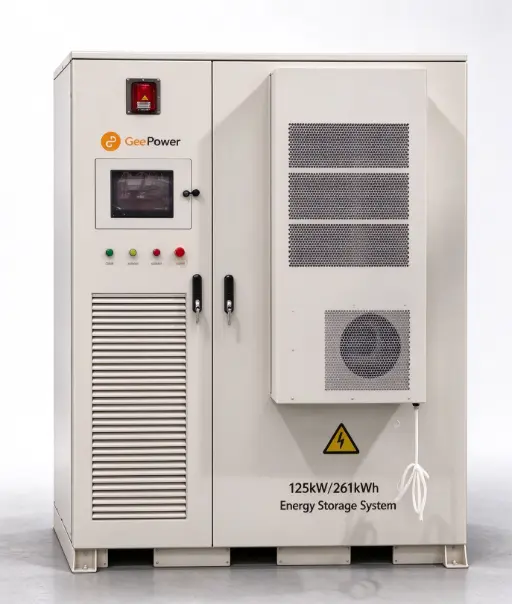
If an integrated configuration matches those needs, it deserves a place on your shortlist.
The more useful question arises when the available configuration does not fit. Perhaps you need longer discharge duration without a corresponding increase in power. Adding complete integrated units could also add PCS capacity you do not currently need. An external PCS arrangement gives you another way to explore the power-to-energy combination, within the supported battery and converter limits.
That flexibility exists in specific product architectures. For example, SMA's Sunny Island X documentation describes modular adjustment of AC power and battery capacity. It does not mean every battery cabinet can work with any PCS.
Before moving to separate equipment, ask whether the supplier offers another integrated configuration. All-in-one products can also have configuration choices. A preferred PCS brand does not automatically require a split system: factory-integrated products using third-party inverters are available.
The same approach applies to a specified EMS or monitoring platform. Ask whether the integrated product supports the required interface. Choose an external arrangement when it solves an actual configuration problem or provides a useful advantage over the integrated offer.
Who Will Match and Integrate the System?
The value of factory integration becomes clearer when you look at the work already completed before delivery. In an integrated cabinet, component selection, internal power connections and communication between the battery and PCS can be handled within the manufacturer's product design and factory testing.
For the buyer, that can reduce the number of separate matching decisions and internal connections left to the site team. It is particularly useful when the available configuration fits and your team wants a defined equipment package.
Site work still remains. The cabinet must connect to the site's electrical distribution, metering and controls. Commissioning must establish that the installed system follows the intended operating strategy. Ask the supplier to distinguish factory-completed work from the work included in site installation and commissioning.
With a battery-only cabinet and external PCS, someone must take responsibility for the combined system. That includes matching the electrical operating limits, establishing BMS-to-PCS communication and coordinating charging and discharging through the controls. The responsible party might be your integrator, the equipment supplier or another named contractor.
Separate enclosures do not require separate procurement contracts. A supplier can provide a matched battery-and-PCS package, with a defined commissioning process. Equally, an integrated cabinet can still involve external controls or services outside the manufacturer's scope.
Compare the work and responsibility behind the offer. A complete external-PCS package may be easier for your team to manage than an integrated offer with unclear site support. The quotation should identify who resolves a compatibility problem and who takes the installed system through commissioning.
Compare the Full Cost—and Check Future Changes
Once both options fit the operating requirement, bring the prices onto the same basis. A battery cabinet price that excludes power conversion cannot be compared directly with an integrated cabinet price that includes it.
Use the following categories to identify what each proposal includes:
- Equipment: battery cabinets, PCS, cooling, protection and required control hardware.
- Electrical installation: AC and DC distribution, cables and site connections.
- Delivery and placement: freight, unloading, lifting and foundations where applicable.
- Controls and commissioning: metering, EMS integration, configuration and system testing.
- Service: technical support, site attendance, software charges and agreed spare parts.
You do not need a detailed financial model to make an initial comparison. You do need to account for equipment or work that appears in one offer and is left for your contractor to supply in the other.
An integrated cabinet can justify a higher equipment price if it removes enough selection, assembly or commissioning work from the delivery scope. An external PCS arrangement can be attractive if its configuration better matches the required power and energy, and the resulting value outweighs the additional integration work. Actual quotations establish which applies.
As the installation grows, check whether layout, distribution and coordination costs change that comparison; cabinet count alone does not establish which format to choose.
Check the next change you actually expect
If expansion is part of the plan, ask what would have to be purchased to add usable energy while keeping the same required power. An integrated platform might expand through additional complete units or supported battery modules. An external PCS arrangement might accommodate more battery capacity within its existing limits, or require additional conversion equipment. Get the answer for the proposed configuration.
For maintenance, keep the question equally practical: how is a failed battery module or PCS replaced, what must stop during the work, and who supplies the replacement?
An integrated cabinet does not automatically require whole-cabinet replacement. Separate equipment does not automatically guarantee an easier repair. Access, replaceable components, spare parts and service arrangements determine the actual maintenance route.
Which Option Should You Shortlist?
Use the configuration and delivery comparison to set your shortlist, then resolve any remaining differences in scope and cost.
If both options work, ask each supplier to confirm three things:
- Does the proposed system meet the same operating requirement? State the output, usable energy, application and any required control interface.
- What does the price include? Identify the external equipment, installation and services still needed.
- Who is responsible for integration and commissioning? Name the party that will make the complete system work and resolve interface problems.
You can start that discussion with your project location, intended use, required power and energy or discharge duration. Add any specified PCS, EMS or expansion plan. A complete engineering package is not necessary to begin a useful configuration discussion.
For a GeePower Cabinet BESS enquiry, share those basic requirements and ask the team to discuss the available configurations and supply scope with your EPC or system integrator. That moves the comparison from two cabinet prices to the equipment package your site actually needs.
👉Click for more GeePower Cabinet BESS models
👉See GeePower Cabinet BESS Projects
References / Sources
- Sandia National Laboratories — Jacob Mueller, Michael Ropp and Stan Atcitty — Energy Storage Handbook, Chapter 13: Power Conversion Systems. Used for the PCS interface and control role.