Containerized BESS for MWh-Scale Energy Storage Projects
GeePower Containerized BESS integrates battery clusters, BMS, PCS, EMS, monitoring, thermal management, power distribution, and fire protection into a centralized outdoor energy storage platform.
With system capacities ranging from 1 MWh to 5 MWh, it is designed for large factories, industrial parks, renewable energy plants, and other large-scale energy storage applications.
High-Capacity 500kW / 1MWh ESS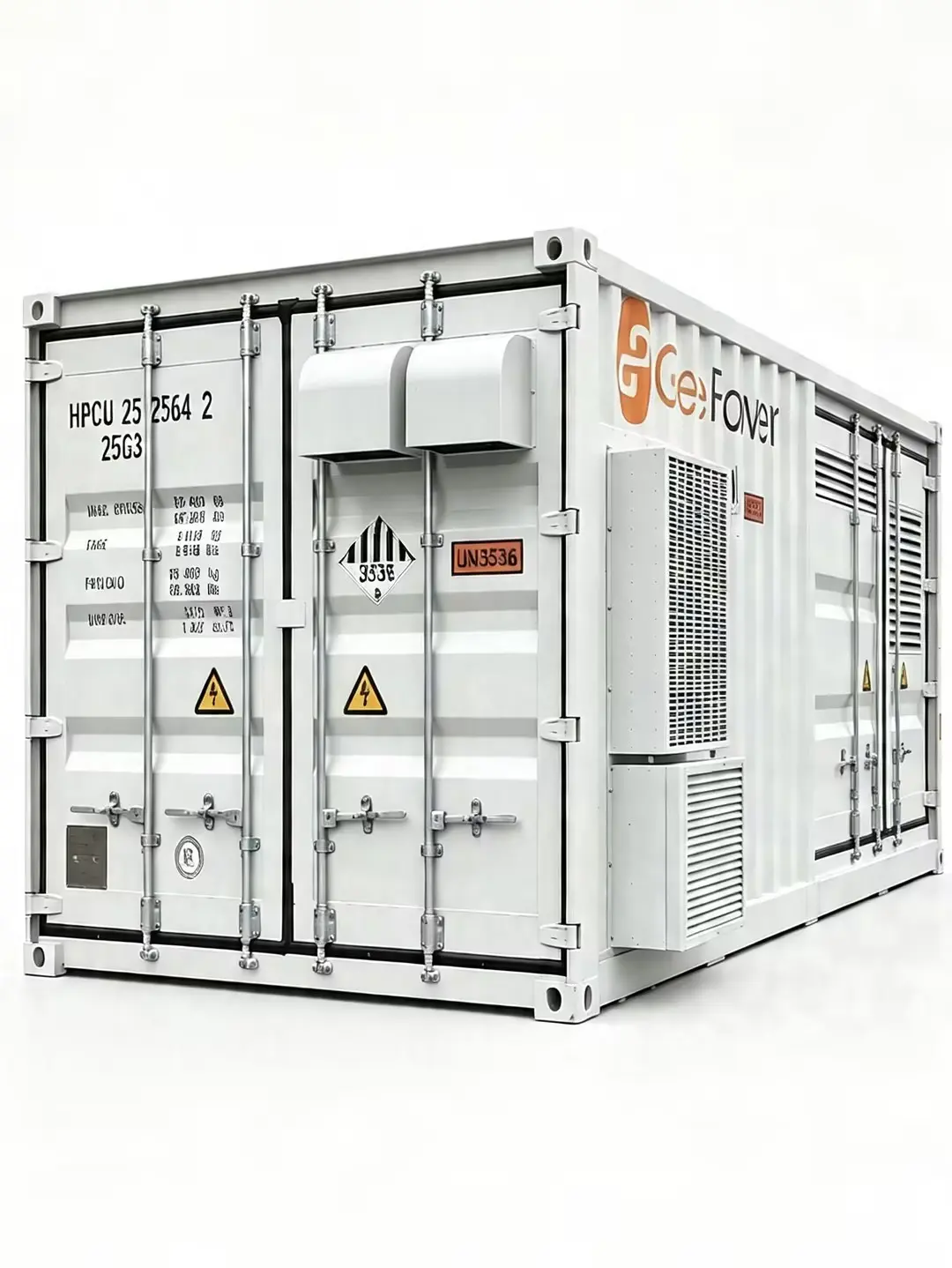
Technical Specification
Parameter | Specification |
Model | GP-ESS1000-716.8V1400Ah |
| Cell type | LFP 3.2V 280Ah |
| Number of battery clusters | 5 |
| Battery system power | 1003.52kWh |
| Rated output power | 500kW |
Maximum output power | 550kW |
| Max.PV power | 600/660/720kW |
| Dimensions(W*D*H)(mm) | 6058*2438*2591 |
| Protection class | Outdoor type IP54 |
| Temperature control |
Air conditioner |
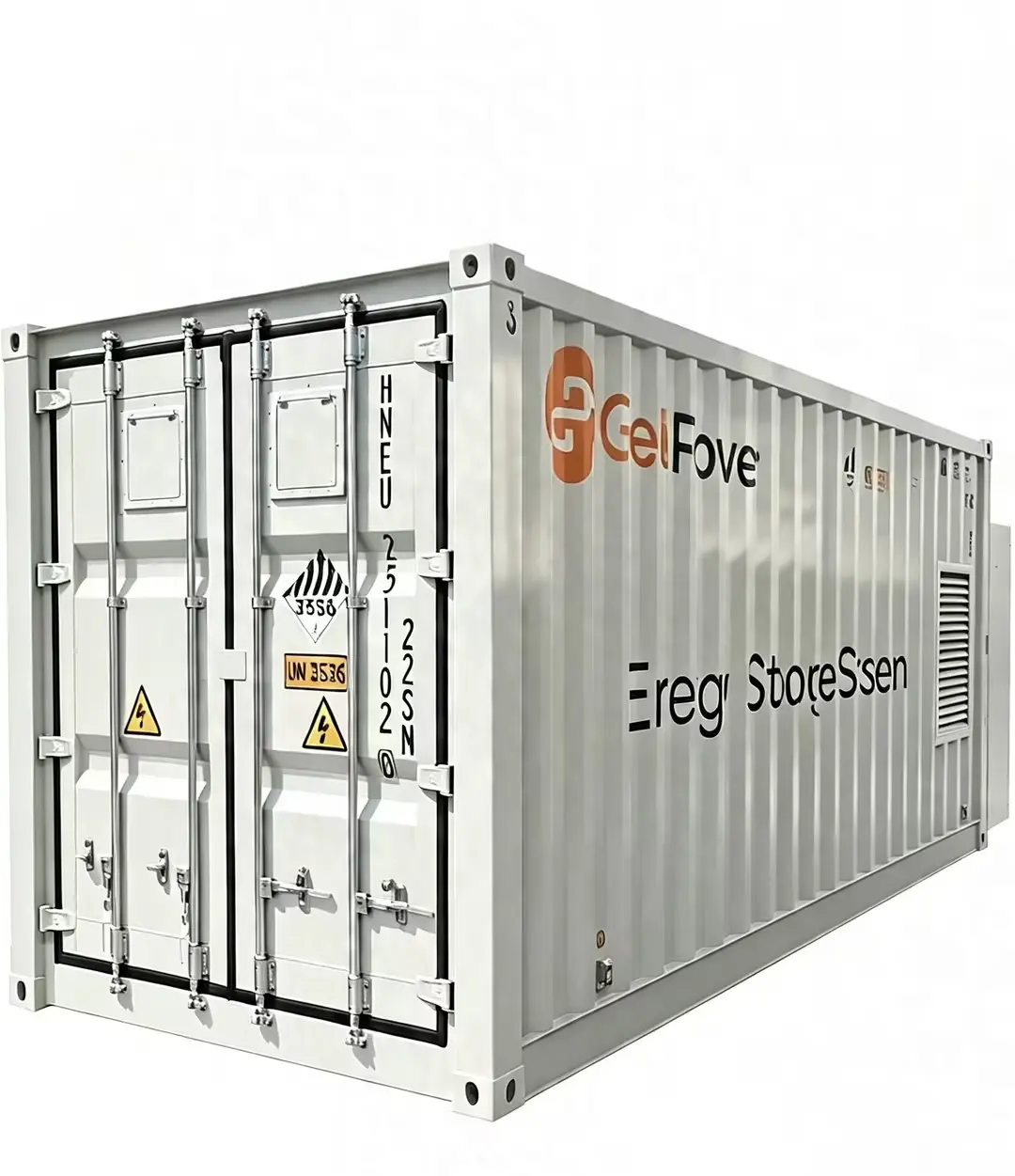
Technical Specification
Parameter | Specification |
Model |
GP-ESS1500-768V1960Ah |
Cell type | LFP 3.2V 280Ah |
| Number of battery clusters | 7 |
| Rated energy | 1505.28kWh |
Rated output power | 500kW |
Maximum output power | 550kW |
Max.PV power | 600/660/720kW |
| Dimensions(W*D*H)(mm) | 6058*2438*2591 |
| Protection class | Outdoor type IP54 |
| Temperature control | Air conditioner |
Massive 5MWh Energy Storage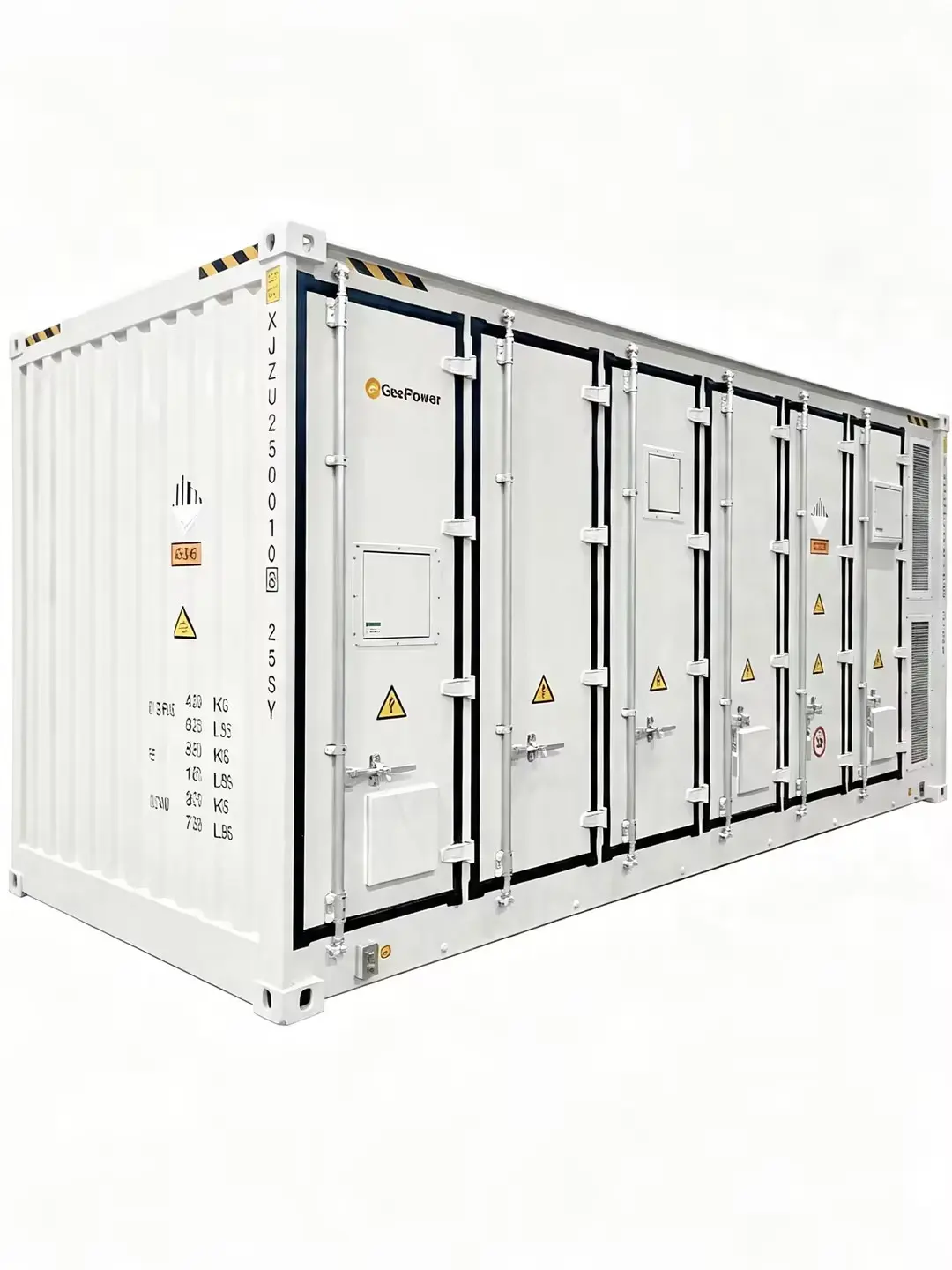
Technical Specification
Parameter | Specification |
Model |
GP-ESS5000-716.8V7000Ah |
| Cell type | LFP 3.2V 280Ah |
| Number of battery clusters | 25 |
Battery system power | 5017.6kWh |
| Rated output power | 500kW |
| Maximum output power | 550kW |
Max.PV power | 600/660/720kW |
| Dimension | 40ft Container |
| Protection class | Outdoor type IP54 |
| Temperature control | Air conditioner |
Where Container BESS Fits BEST
Container BESS is a strong choice when a project requires centralized MWh-scale energy storage and has suitable outdoor space, transport access and lifting conditions.
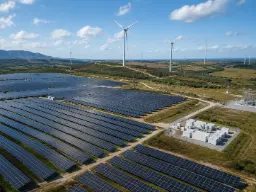
Renewable Energy Plants

Remote Mining & Off-grid Sites
Remote Communities & Microgrids
Large Industrial Parks
Grid Support & Substations
Grid Support & Substations
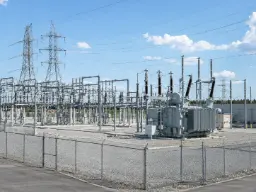
Containerized BESS brings MWh-scale storage close to grid connection points, providing a centralized energy reserve for peak demand management. Multiple containers can be combined to meet project capacity requirements, with suitable PCS and controls enabling frequency and voltage support.
Large Industrial Parks
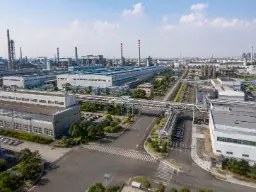
For industrial parks with substantial electricity demand, containerized BESS provides centralized storage for peak shaving, energy shifting and on-site solar use. Outdoor installation preserves valuable production space, while multiple containers can accommodate larger energy requirements.
Remote Communities & Microgrids
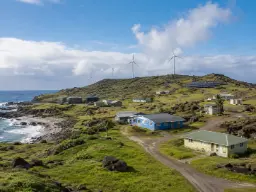
Containerized BESS stores surplus renewable energy for use when solar or wind generation falls. Factory preassembly reduces equipment assembly at remote locations, while integration with compatible microgrid controls and generators helps communities manage variable generation and daily electricity demand.
Remote Mining & Off-grid Sites
Mining and remote operations often need substantial energy reserves where grid access is limited. Containerized BESS offers large-capacity storage in transportable units and, within a properly designed hybrid system, can absorb load fluctuations and help reduce diesel generator runtime.
Renewable Energy Plants
Solar and wind plants need storage that can grow with generation capacity. Containerized BESS provides repeatable MWh-scale building blocks to store surplus output, shift delivery to higher-demand periods and smooth power fluctuations through coordinated plant controls.
GeePower Containerized ESS Layout and Key Components
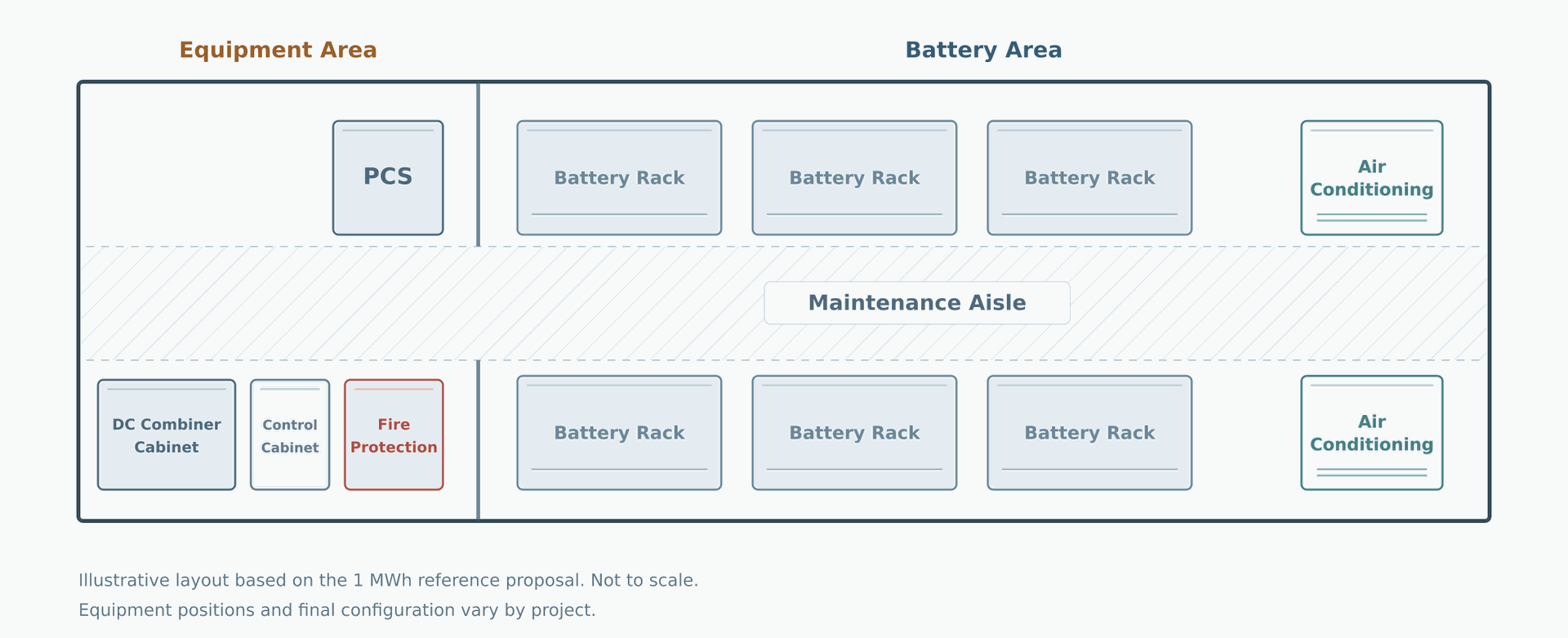
This reference 1 MWh containerized ESS layout separates the battery area from the equipment area, with a central maintenance aisle providing access to battery racks and equipment. The layout identifies the PCS, DC combiner cabinet, air conditioning and fire protection equipment. Final positioning varies by project configuration.
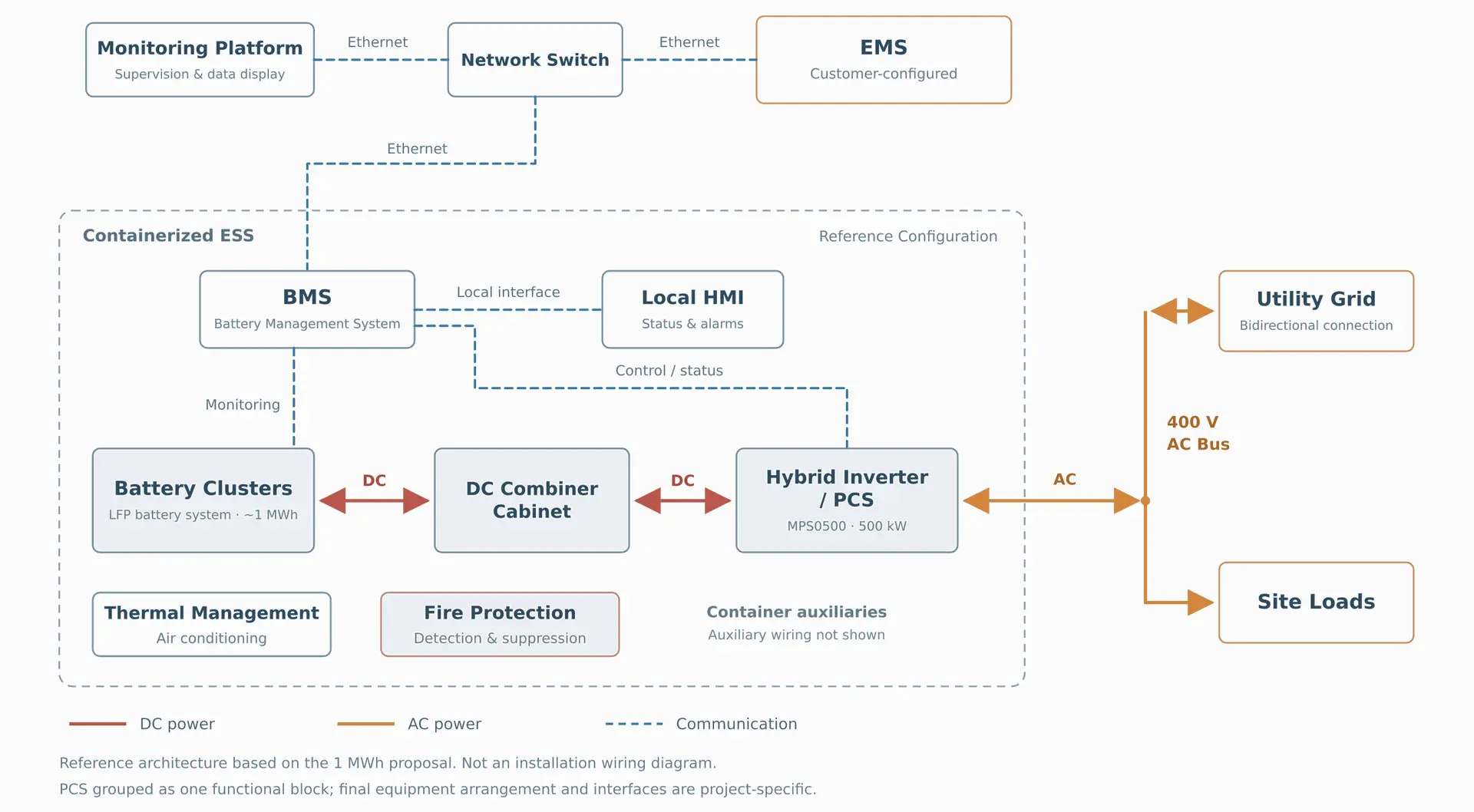
GeePower Containerized ESS System Architecture
In this reference 1 MWh system, battery clusters connect through a DC combiner cabinet to a bidirectional hybrid inverter/PCS and the site’s AC network. Separate communication links connect monitoring and control equipment, including the BMS, local HMI and customer-configured EMS. Solid lines indicate power connections; dashed lines indicate communication.
Why Choose a Container BESS?
Containerized BESS is designed for projects that require MWh-scale storage, centralized system control and coordinated integration of multiple electrical and safety subsystems.
Centralized Management
Monitor battery status, power flow, alarms and operating modes through a unified EMS.
MWh-Scale Integration
Battery, PCS, EMS, cooling, fire protection and power distribution are integrated into one centralized system.
Coordinated Safety
Integrated temperature control, monitoring and fire protection support safer system operation.
Scalable Expansion
Add more container blocks as project capacity and power requirements grow.
EMS Monitoring and Energy Dispatch
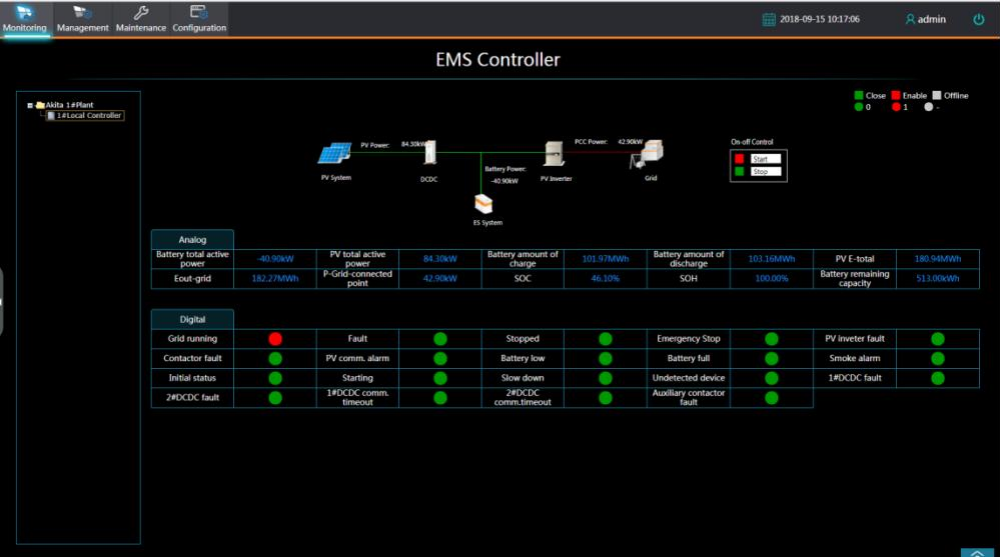
The energy management system coordinates battery operation with the site’s operating objectives. It collects information from the BMS, PCS and auxiliary equipment to support monitoring, power scheduling and operating analysis.
Monitor System Status and Operating History
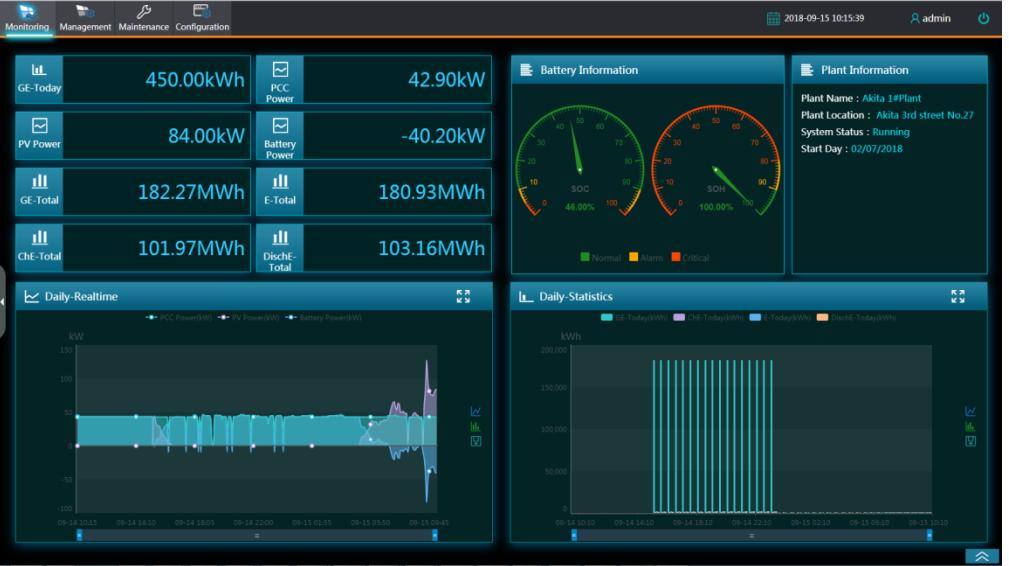
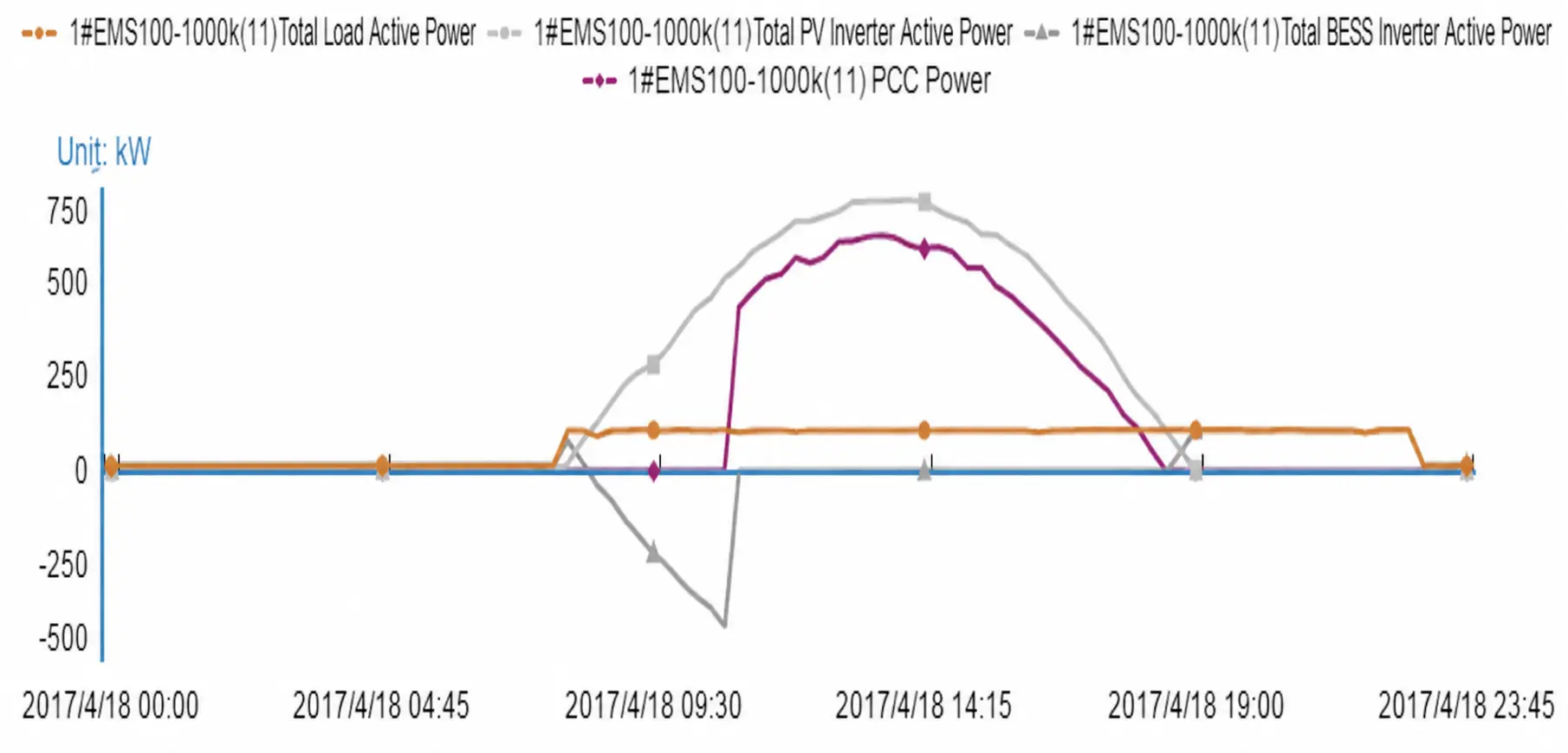
View battery state of charge, charging and discharging power, equipment status and alarms through a centralized interface. Historical trends, event records and energy statistics help operators investigate faults, review operating schedules and assess system utilization.
Schedule Charging and Discharging
Charging schedules and power commands can be configured for peak-valley tariff operation, demand management and renewable energy coordination. Dispatch settings are matched to the project’s load profile, operating windows and equipment limits. Battery and converter protection functions are handled by the BMS, PCS and dedicated protection devices.
Integrate with Site Controls
Communication interfaces support data exchange with the battery system, power conversion equipment and site monitoring platform. Depending on the selected controller, interface options may include Modbus and IEC 104. For EPC integration, the project interface schedule defines data points, control permissions, alarm signals and communication requirements.
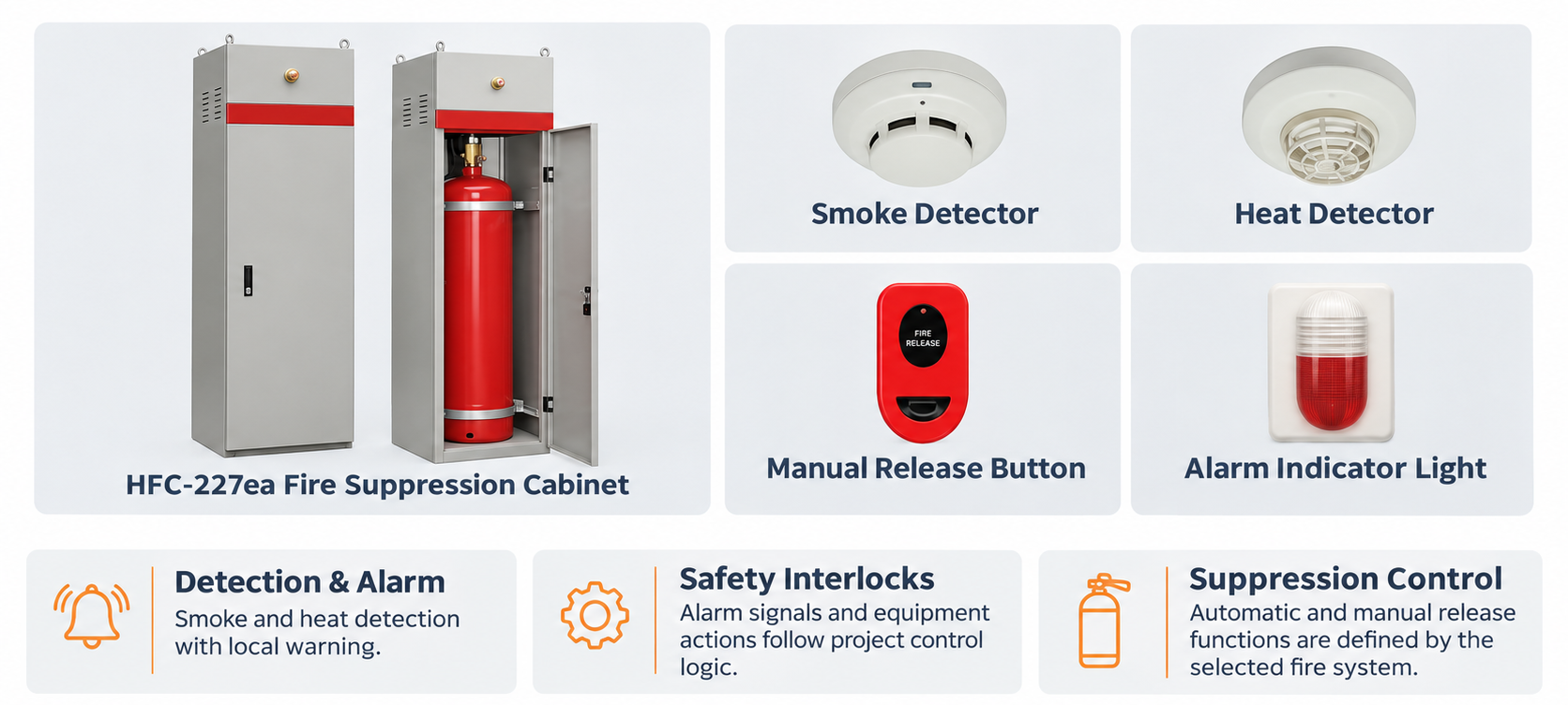
Fire Detection and Safety Interlocks
Fire protection is considered alongside enclosure design, temperature management and safety controls. The features below illustrate the reference 1 MWh containerized ESS configuration.
Smoke Detection and Fire Suppression
The reference layout includes smoke sensors and a dedicated gas fire suppression cabinet. Detector locations, alarm interfaces and suppression controls are defined in the project fire protection design.
Enclosure Insulation and Emergency Access
Rock wool insulation is incorporated into the container walls and doors. The enclosure layout also includes ventilation ducts, escape doors and lighting to support temperature management, equipment access and emergency egress.
Safety Interlocks and Site Integration
Electrical and mechanical interlocks form part of the reference container design. For EPC integration, alarm outputs, equipment shutdown actions, ventilation response and emergency operating sequences are confirmed in the project control documentation.
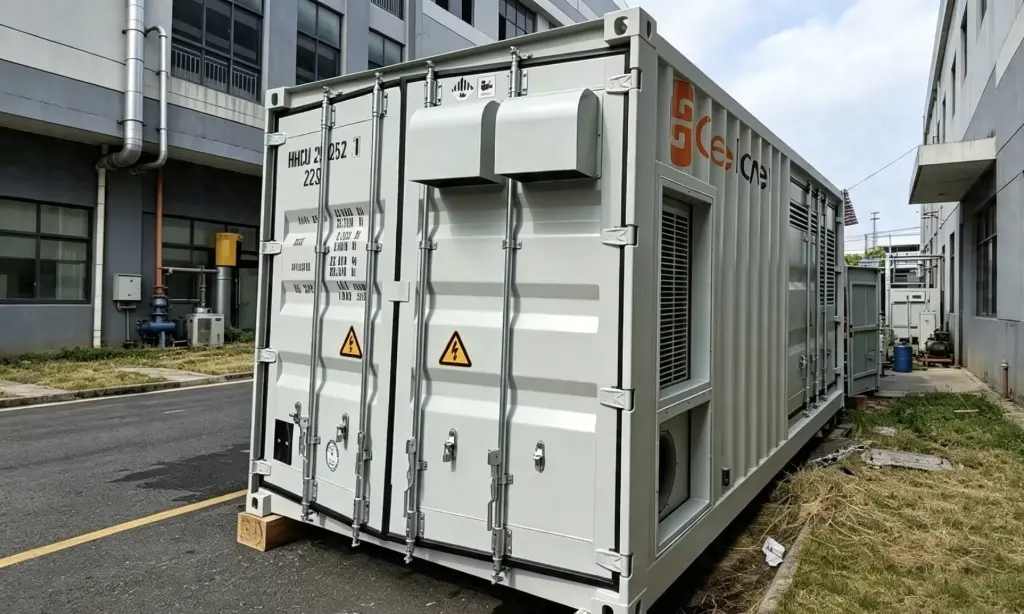
Battery Storage for a Heat Pump Factory in Estonia
• System: Container ESS
• Energy storage: 3 × 1000kWh
• Application: Heat pump factory
• Project year: 2025
Container BESS in Real Projects
Explore how GeePower containerized energy storage systems are applied in solar integration, industrial energy management and large-scale backup projects.
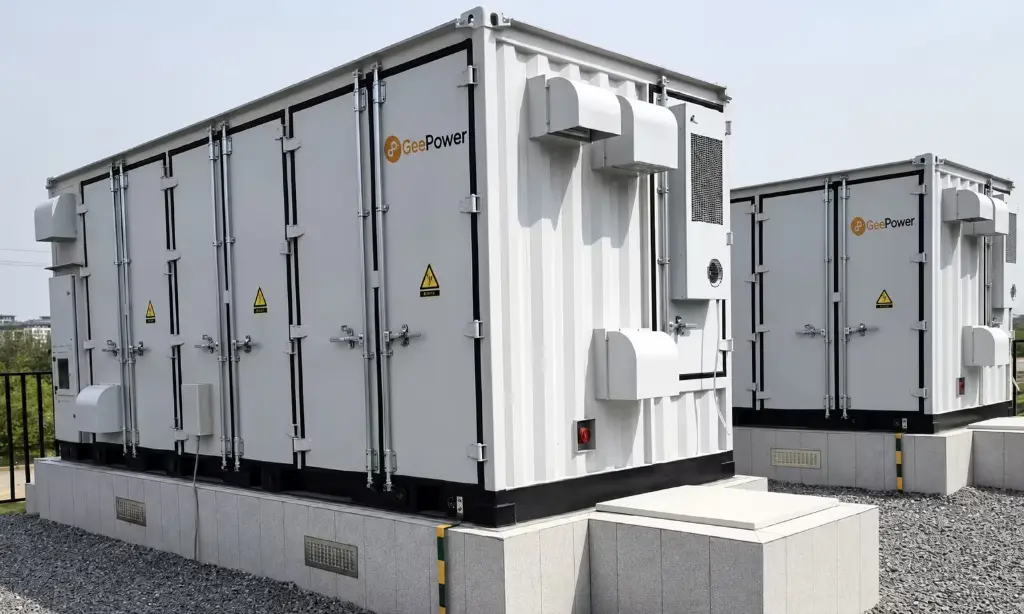
Battery Storage for Solar Plant Backup and Grid Support in India
• System: Container ESS
• Energy storage: 30MWh
• Application: Backup power
• Project Year: 2025
Choose the Right Containerized BESS for Your Project
Work through the key decisions—from defining your requirements to comparing proposals and planning delivery.
What does your project need?
Define the operating goal, load profile, grid conditions and site constraints before choosing a system.
👉 BESS Project Requirements: A Planning Checklist for Commercial & Industrial Sites
👉 BESS Container Size: 20ft vs 40ft, Capacity and Site Fit
How much power and energy do you need?
Separate power demand from energy capacity. For backup projects, start with critical loads and the required backup duration.
👉BESS Sizing for 2-Hour Commercial Backup: Power and Capacity
Which system configuration fits your site?
Compare cabinet and container formats, then consider whether the battery and PCS should share one enclosure or use separate units.
👉Cabinet BESS vs Container BESS: Key Differences for C&I Projects
How do you choose a reliable supplier?
Evaluate technical fit, supporting evidence, delivery responsibilities and after-sales support before building your shortlist.
👉How to Choose a Reliable C&I BESS Supplier: A Step-by-Step Buyer’s Guide
Are you comparing equivalent proposals?
Understand what drives price differences, then align system scope, performance assumptions and service terms before comparing totals.
👉 BESS Container Price: How to Use Your First Quote to Budget a C&I Project
👉Why C&I BESS Quotes Vary So Much — What to Check Before Comparing Price
👉How to Compare C&I BESS Quotes Like-for-Like: A Practical Evaluation Checklist
What needs confirming before delivery?
Confirm site readiness, applicable approvals, installation responsibilities, commissioning and acceptance criteria before placing an order.
Containerized BESS Pre-Shipment and Receiving Inspection: What EPCs Check Before and After Delivery
FAQ
Container BESS Frequently Asked Questions
A Containerized BESS is a battery energy storage system installed within a container enclosure.
It brings battery clusters, BMS, PCS, EMS, thermal management, monitoring, power distribution and fire protection into a centralized system designed for large commercial, industrial, renewable energy and microgrid projects.
GeePower standard configurations currently include:
- 500kW / 1003.52kWh
- 500kW / 1505.28kWh
- 500kW / 5017.6kWh
The appropriate capacity and power configuration depends on the required operating duration, load profile, renewable generation, grid connection and project operating strategy.
The system can integrate battery clusters, BMS, PCS, EMS, monitoring, thermal management, power distribution and fire protection.
The exact equipment list and delivery boundary should be confirmed in the product datasheet and project proposal because different projects may require different power conversion, transformer and grid-connection configurations.
The listed models are provided with a standard rated system output, but the final PCS configuration should be confirmed according to project requirements.
Transformers, medium-voltage switchgear, grid-connection cabinets and other balance-of-system equipment may be included as project options or supplied separately.
The quotation should clearly define the delivery boundary.
Yes. Multiple containerized BESS units can be coordinated to create a larger MW or MWh-scale energy storage plant.
The project design must consider PCS capacity, transformer sizing, AC or DC bus architecture, EMS communication, protection coordination and grid-connection requirements
Yes. A containerized BESS can be designed for grid-connected, off-grid or hybrid operation with solar PV, generators and site loads.
Available operating modes depend on the selected PCS, EMS, switching equipment and overall project architecture.
A containerized BESS normally requires:
- A suitable outdoor installation area
- A prepared and level foundation
- Container transport access
- Crane or lifting access
- Required safety and maintenance clearances
- Planned cable and communication routes
- Drainage and environmental protection
- Access for future maintenance
The final requirements should follow the technical manual, site survey and local regulations.
Plan the Right Container BESS for Your Project ?
Send us your basic project information, and our team will help evaluate the appropriate power, battery capacity and system configuration.