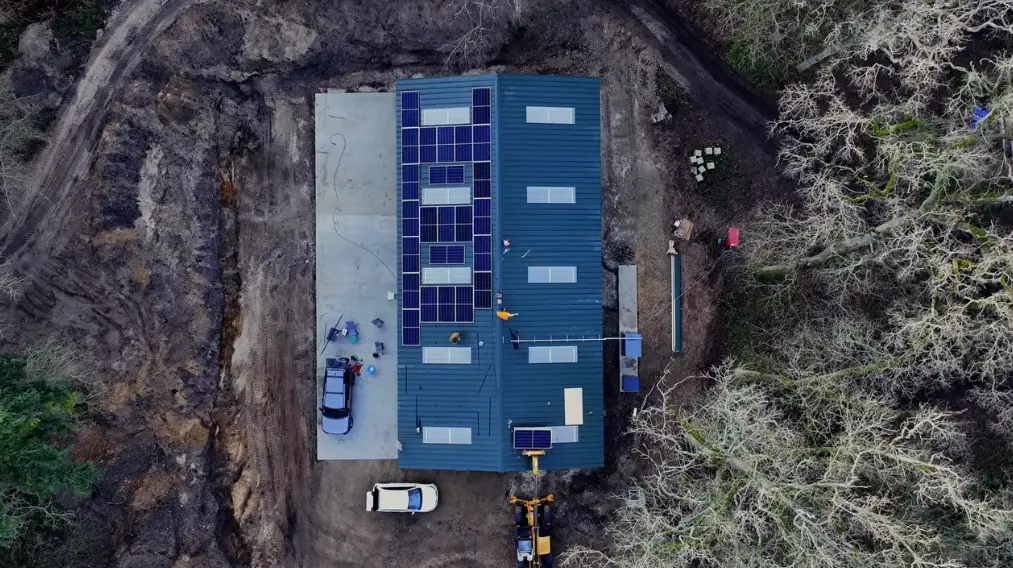
From Generator Power to Solar + Battery Storage: A Forest Off-Grid Energy Project
Commercial & Industrial ESSCategory
Case Overview
A remote forest project started with a small generator and a practical challenge: how to create a reliable power system for a site that was still under development, with future electricity demand expected from buildings, pumps, gates, lighting and other equipment.
GeePower worked with the customer to understand the expected loads and project requirements, then configured a 20kW / 51.2kWh energy storage system for the site.
The complete supply included the solar panels, battery energy storage system, inverter and related system components. Installation was carried out locally, with GeePower providing remote technical support through phone, email and WhatsApp during the installation and commissioning process.
At the time the project was documented, the solar + battery system had already been operating for several months, while the forest development itself was still in progress.
Media Note: Project footage, customer comments and operational observations are based on material provided or published by the project owner. Performance figures shown in this case reflect this specific installation, operating conditions and stage of project development.
System at a Glance
Project |
Details | |
Application | Remote forest / off-grid property | |
| Energy Storage System | 20kW / 51.2kWh | |
| Battery System Voltage | 512VDC nominal | |
| AC System | 380VAC, three-phase | |
| Solar Array | 36 solar panels | |
| PV Configuration | Three strings of 12 panels | |
| Maximum PV Input Power | 30kW | |
| MPPT | 2 independent MPPT channels | |
MPPT Voltage Range | 150–850VDC | |
GeePower Scope |
| |
Observed Solar Output | Approximately 13–18kW during filming under changing sunlight conditions |
The Challenge: Building Reliable Power for a Remote Site
Before the new system was installed, electricity at the forest site was supplied using a small generator.
That was sufficient for temporary power, but the project was expanding.
Electricity would eventually be required across multiple areas of the property, including:
- the main building;
- a pump house;
- entrance gates;
- the lower yard;
- future floodlights around the forest;
- construction tools and temporary electrical loads.
The customer therefore needed a system that could support both the current construction stage and higher electricity demand as the property developed.
System Configuration Based on the Project Requirements
Before supplying the equipment, GeePower communicated with the customer about the intended application, expected loads and overall project requirements.
Based on those requirements, the system was configured around a 20kW inverter and 51.2kWh battery capacity, with a nominal battery voltage of 512VDC.
The system supports up to 30kW of PV input, with two MPPT channels and an MPPT operating range of 150–850VDC.
GeePower supplied the main components required for the project, including:
- solar panels;
- battery energy storage system;
- inverter;
- related system equipment.
The objective was not simply to provide a battery cabinet, but to match the storage and power conversion system to the customer's planned off-grid application.
Preparing the Site for the Energy Storage System
Before the battery and inverter equipment were positioned, the installation area had to be prepared.
Power ducting was installed first so the required electrical cables could be routed underground.
A concrete foundation was then poured to provide a stable base for the battery and inverter equipment.
Once the foundation was complete, the energy storage system and the project's electrical kiosks were moved into position.
This infrastructure created a central power point from which electricity could later be distributed to different areas of the forest property.
Dedicated Power Distribution Across the Site
Two custom electrical kiosks were fabricated for the project using galvanized and powder-coated steel.
One kiosk was used for incoming electrical connections, while the second housed the main distribution equipment.
From the distribution point, underground ducts run toward several areas of the site, including the pump house, gates and lower yard. Additional infrastructure has also been planned for future lighting around the forest.
The distribution system includes a three-phase fuse board and surge protection.
A 25mm² SWA three-phase cable connects the inverter system to the distribution board, together with an 80A MCCB used to isolate the inverter from the site's electrical distribution system.
Installing the 36-Panel Solar Array
The project uses 36 solar panels installed on the roof of the site's main structure.
The array was divided into three strings of 12 panels.
The building had already been positioned with solar exposure in mind. Although surrounding trees create some shading during parts of the day, the array has still produced substantial power under suitable conditions.
The solar cables were routed through protective trunking between the panels before continuing toward the inverter and battery system.
This helped organize and protect the cabling in the outdoor environment.
Earthing and Electrical Protection
Two 2-metre earth rods were installed as part of the electrical system.
The installation also includes surge protection, circuit breakers and dedicated solar protection equipment.
These components form an important part of the complete off-grid installation alongside the solar array, inverter and battery system.
Commissioning: When the System Did Not Start as Expected
The commissioning process did not go perfectly on the first attempt.
After the equipment was connected, the system initially failed to operate correctly.
The customer connected a laptop to diagnose the problem and temporarily used a generator to provide enough charge to bring the system back online.
Once the battery had been charged and the commissioning issue had been resolved, the system returned to normal operation.
During the installation and commissioning process, GeePower provided remote technical guidance through phone, email and WhatsApp, allowing issues and configuration questions to be discussed without requiring an engineer to be physically present onsite.
The generator use shown in the project was therefore part of the commissioning process rather than the primary operating concept of the completed system.
Real-World Operation
At the time the project owner documented the installation, the system had already been operating for several months.
His assessment was straightforward:
“It's been working great for a few months now.”
The unusual challenge at this stage was not a shortage of electricity.
Because the main building was still under construction, the site was not yet consuming enough electricity to regularly cycle the 51.2kWh battery.
To create a deeper battery cycle, the owner occasionally switched the solar array off for approximately two days, allowing existing site loads to discharge the battery before reconnecting the PV system.
Once the solar panels were switched back on, the battery could recharge from solar generation.
As additional buildings, pumps, lighting and other loads are brought online, the site's electricity consumption is expected to increase.
Solar Output Observed Onsite
During filming, the system was observed producing approximately 13–18kW of solar power under changing sunlight conditions.
This is consistent with a system designed to accept up to 30kW of PV input, although actual solar production depends on the installed array, panel orientation, shading, weather, season and other site conditions.
The figures above are observations from this specific installation and should not be interpreted as guaranteed production figures for other projects.
At this stage of the forest development, available solar generation has at times exceeded the electricity demand of the unfinished site.
From Temporary Generator Power to a Solar + Storage System
The practical change at the site is larger than the installation of a battery cabinet.
The original temporary power arrangement relied on a small generator. The new infrastructure combines:
Solar PV → Inverter → Battery Storage → Protection & Distribution → Site Loads
That system can now support existing electricity demand while leaving room for additional loads as the property develops.
The project also illustrates why an off-grid installation cannot be specified from battery capacity alone. PV input, inverter power, expected loads, distribution infrastructure and future expansion all need to be considered together.
In this case, GeePower's role covered the process from understanding the customer's requirements and configuring the energy storage solution to supplying the main system equipment and providing remote installation support.
A System Built for a Project Still in Progress
The forest development is not complete.
The electrical infrastructure was installed while the main building and other parts of the property were still being developed, allowing the energy system to begin operating before the project's final load profile had been reached.
Future demand is expected from additional building loads, water pumping, gates, outdoor lighting and other equipment across the property.
This makes the project a useful real-world example of designing an off-grid system around both current demand and future expansion, rather than sizing the system only for the construction stage.
Planning an Off-Grid Energy Storage Project?
Remote properties, farms, workshops, construction sites and other off-grid applications can have very different power requirements.
Battery capacity alone is not enough to define the right system.
For a practical configuration, factors such as:
- peak and continuous load;
- required inverter power;
- solar PV capacity;
- daily energy consumption;
- backup requirements;
- expected future loads;
should be considered together.
Have an off-grid project in development?
GeePower can support off-grid projects with system configuration, battery energy storage, inverter and solar equipment supply, as well as remote technical support during installation and commissioning.