
This case shows how GeePower worked with The 22:23 to adapt Terra A for the UK rather than simply supply an existing product. The project brought local distributor knowledge into product decisions, engineering, compliance work and real installation conditions, while GeePower contributed the manufacturing and technical resources behind the product.
It offers a practical example of what deeper manufacturer–distributor cooperation can look like when a proven product needs to fit a specific market.
Start with a Proven Product, Not a Blank Sheet
GeePower began discussions with Matt about the UK residential energy-storage market in November 2024.
When Matt visited our factory in China on 16 February 2025, he examined several of our residential storage systems before selecting Terra A as the foundation for the UK project.
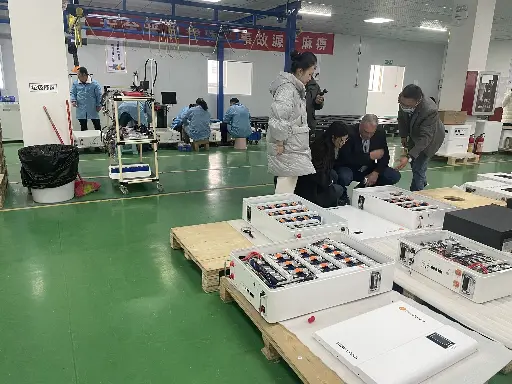
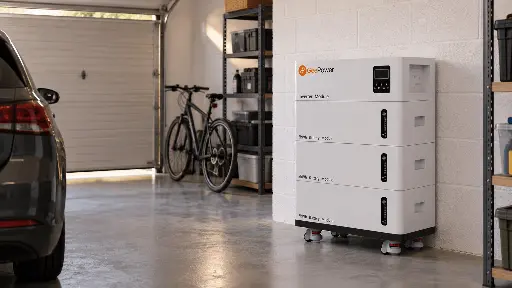
Terra A was already a mature GeePower product platform.
Its modular design was one of the main reasons it suited the project. The system can be configured from 5kWh to 30kWh, allowing different households to select capacity according to their energy demand rather than relying on one fixed configuration.
That gave both sides a solid starting point.
But distributor support does not always mean building a completely new product.
Sometimes the more important question is:
Which parts of a proven platform should remain unchanged — and which parts genuinely need to be adapted for the local market?
That became the central engineering question for Terra A in the UK.
Let the Local Partner Challenge Factory Assumptions
GeePower’s engineers had already worked on residential, commercial, off-grid and hybrid storage systems across several international markets, including Africa and Southeast Asia.
That experience naturally shaped our initial approach.
Where possible, our engineering team wanted to retain mature solutions that had already been tested in real applications. Doing so helps protect manufacturing consistency, product stability and the risks associated with unnecessary customisation.
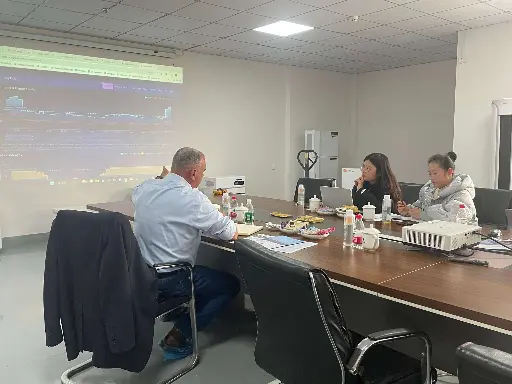
Matt kept bringing the discussion back to Britain.
His point was that UK residential wiring, G99 requirements, DNO procedures, installer expectations and local electrical practices could not simply be treated in the same way as another market.
A solution that had worked elsewhere still had to prove that it made sense in a British home.
That difference in perspective led to detailed — and sometimes lengthy — discussions.
The teams worked through issues including smart meters, RCBO ratings, rotary isolators, backup circuits, maintenance bypass arrangements and installer documentation.
Some of those components were physically small.
The decisions around them were not.
At times, the project moved more slowly than either side wanted because GeePower and Matt were approaching the same problem from different directions.
Our engineers were protecting manufacturing stability, proven engineering and long-term supportability.
Matt was protecting local suitability, installation practicality and UK compliance.
Neither perspective was enough on its own.
GeePower continued studying the UK requirements and reviewing the product configuration. Matt continued explaining what installers, households and DNO processes looked like in practice.
Gradually, the two sides began solving the same problem rather than defending separate positions.
Turn Local Market Knowledge into Product Decisions
One example was the way Matt explained UK electricity tariffs.
For some households — particularly those with electric vehicles — overnight electricity can be significantly cheaper than daytime or peak-period electricity.
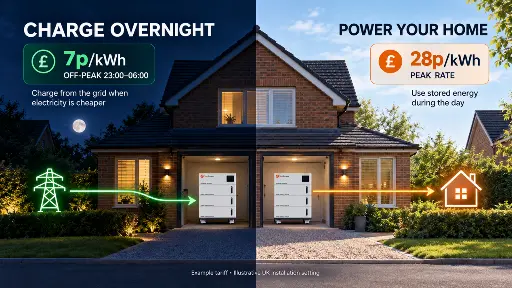
That made one Terra A use case especially important:
Charge the battery when electricity is cheaper, then use the stored energy when grid electricity costs more.
At the time, the original inverter configuration did not include integrated timed charging and discharging. An additional timing device would have been required.
Following further internal discussion and engineering assessment, GeePower integrated scheduled charging and discharging into the UK configuration.
Dual MPPT inputs were also incorporated so that the system could support households with solar PV while remaining useful for suitable households without rooftop solar.
The aim was not to make home storage relevant only to households installing a complete solar-plus-storage system. The UK configuration also needed to support the practical use of lower-cost overnight electricity where appropriate.
Support Also Means Knowing When Not to Cut Cost
Working with a local distributor is not the same as agreeing to every request for a lower price.
The UK project also gave us an example of the opposite.
Long-term after-sales support across two countries creates practical constraints. Equipment installed in the UK cannot simply be returned to China whenever a hardware issue occurs.
The Terra A battery module uses a highly integrated, laser-welded structure. If a module develops a confirmed fault, local module replacement is more practical than dismantling it in the UK and repairing individual cells.
That places greater importance on reducing the probability of failure from the beginning.
During discussions around long-term reliability and warranty expectations, GeePower proposed changing to a higher-cost cell supplier.
The consequence was clear: the product cost would increase.
This could easily have become a conflict.
Matt’s project was built around keeping Terra A accessible to ordinary households, and throughout development he had repeatedly challenged costs that did not create enough practical value.
But once the technical reasons for the cell-supplier change were explained, he accepted the additional cost.
Matt had been challenging unnecessary cost, not cost in isolation. When the additional expense protected long-term reliability, he accepted it.
For GeePower, our responsibility in that discussion was not simply to meet a target price. It was to explain why a more expensive decision was necessary and what it protected.
Help the Distributor Cross the Compliance Gap
Once the UK configuration had taken shape, the work continued through product development, engineering verification, repeated testing, technical documentation and compliance preparation.
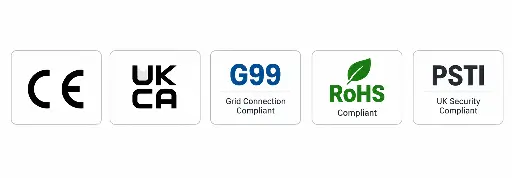
By February 2026, Terra A had progressed through the relevant conformity, testing and documentation work associated with the UK project, including CE and UKCA requirements, RoHS and PSTI compliance, and G99 testing.
In March 2026, the first UK Terra A configuration was registered with the ENA under reference:
HUNAR/19421/V1
These steps are less visible than a product launch or a sales campaign, but they are part of what makes market entry possible.
In the UK project, GeePower’s involvement extended beyond providing a datasheet, quotation and existing product. Where market-specific engineering and compliance work were required, those requirements became part of the project.
It does not mean every market requires the same engineering changes, certification process or product configuration.
The requirement has to come from the market itself.
Sometimes the Factory Needs to Leave the Factory
There is also a limit to what a manufacturer can learn through email, drawings and video calls.
During the development process, Matt repeatedly invited the GeePower team to visit the UK.
His argument was practical.
Drawings, technical specifications and video calls could explain the wiring, electrical limits and installation area, but they could not fully show how people actually lived inside the homes where the system would be installed.
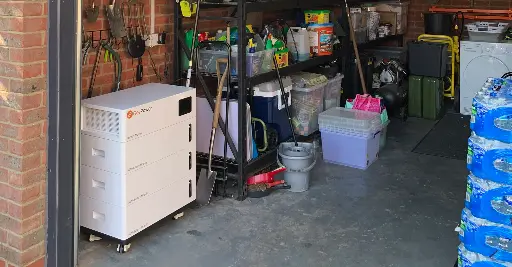
In August 2026, GeePower’s CTO and team travelled to Northampton.
Matt took the team through different residential areas and showed us a variety of UK homes, including older properties, newer developments, garages and other potential installation spaces.
He explained existing wiring limitations, the questions installers were likely to ask and the practical concerns of homeowners.
For our team, a British home stopped being a diagram in a technical document.
It became a real building with limited space, existing cables, household routines and an electricity bill arriving every month.
A manufacturer can understand its own product extremely well while still understanding less about a local market than the distributor operating inside it every day.
In this case, going to Northampton gave the team context that another online meeting could not provide.
What the UK Project Taught Us About Distributor Partnerships
The Terra A UK project was not a frictionless process. It involved disagreements, technical discussions that lasted longer than expected and assumptions on both sides that had to change.
But that is also why the project became useful.
Matt and The 22:23 brought things GeePower could not create inside the factory:
- local installation realities;
- feedback on electrical practices;
- understanding of DNO procedures;
- insight into how customers would actually use the system.
GeePower brought a different set of capabilities:
- an existing residential energy-storage platform;
- product and engineering resources;
- manufacturing experience;
- testing and technical documentation;
- market-specific compliance work;
- manufacturer-side technical support.
The value came from connecting those two sides.
A strong distributor relationship should not be limited to:
manufacturer supplies → distributor resells.
Local market knowledge should be able to flow back into product and engineering discussions. At the same time, manufacturing and engineering capability should flow into the market to help the distributor solve real problems.
That is a much deeper form of cooperation than simply supplying inventory.
What We Want Future GeePower Distributors to Know
The UK project does not mean that every GeePower distributor needs a new product configuration, a year of engineering work or a factory team visiting their country.
Markets are different.
The requirements should determine the level of support.
But there is one principle we want potential partners to understand.
If you know something about your market that we do not, tell us — whether it concerns customer needs, installer problems, local requirements or where an existing product fits and where it does not.
Our role as the manufacturer is to bring product engineering, manufacturing experience and technical resources into that conversation.
The Terra A UK project began with a mature product and a distributor who kept challenging us to look more closely at his market.
The resulting UK configuration reflects both GeePower’s manufacturing experience and the local knowledge Matt brought to the project.
FAQ
GeePower can support distributors beyond product supply by bringing local market feedback into product engineering, technical documentation, compliance work and market-specific configuration where required. The level of support depends on the actual needs of each market rather than following the same process everywhere.
No. Terra A was already a mature GeePower residential energy storage platform before the UK project began. GeePower worked with The 22:23 to adapt the existing platform to UK market requirements, including local electricity use cases, engineering considerations and compliance needs.
The UK Terra A project included conformity, testing and documentation work covering CE and UKCA requirements, RoHS and PSTI compliance, and G99 testing. In March 2026, the first UK Terra A configuration was registered with the ENA under reference HUNAR/19421/V1.
Not necessarily. Different markets have different technical, regulatory and commercial requirements. The Terra A UK project required specific engineering, compliance work and on-site market learning, but other distributor projects may require a different level of support. GeePower evaluates support according to the needs of the market and the project.
Looking for an energy-storage manufacturing partner for your market?
Learn more about GeePower’s distributor cooperation and talk to our team about your local requirements.
Become a GeePower Distributor →